
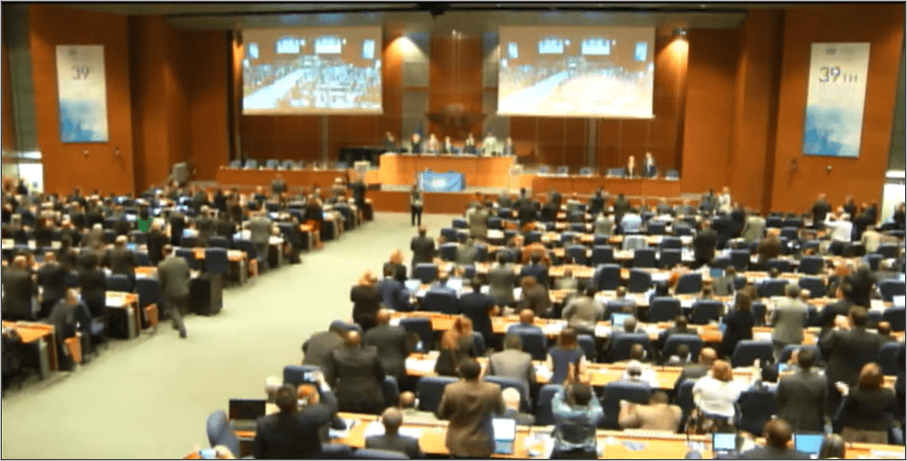
Ten years ago, the 39th session of the ICAO Assembly adopted a landmark global agreement to address CO₂ emissions from international aviation through a single, harmonized market-based measure: the ICAO Carbon Offsetting and Reduction Scheme for International Aviation (CORSIA).
 This was a memorable moment for everyone working in aviation environmental protection. CORSIA was the first sector‑wide market‑based measure (MBM), and remains so today, representing the culmination of years of technical work, multilateralism, and international collaboration across more than 190 States. What brought the many different views and positions together was a common understanding among States and the aviation sector: a globally harmonized approach to addressing CO₂ emissions from international aviation is essential, given the transboundary nature of the sector. That remains just as true today.
ICAO Assembly Resolution A42-22, paragraph 18: “Determines that the CORSIA is the only global market-based measure applying to CO2 emissions from international aviation so as to avoid a possible patchwork of duplicative State or regional MBMs, thus ensuring that international aviation CO2 emissions should be accounted for only once.” It was in this context that the ICAO Assembly adopted CORSIA as the global MBM and has consistently reaffirmed this approach at subsequent Assemblies.
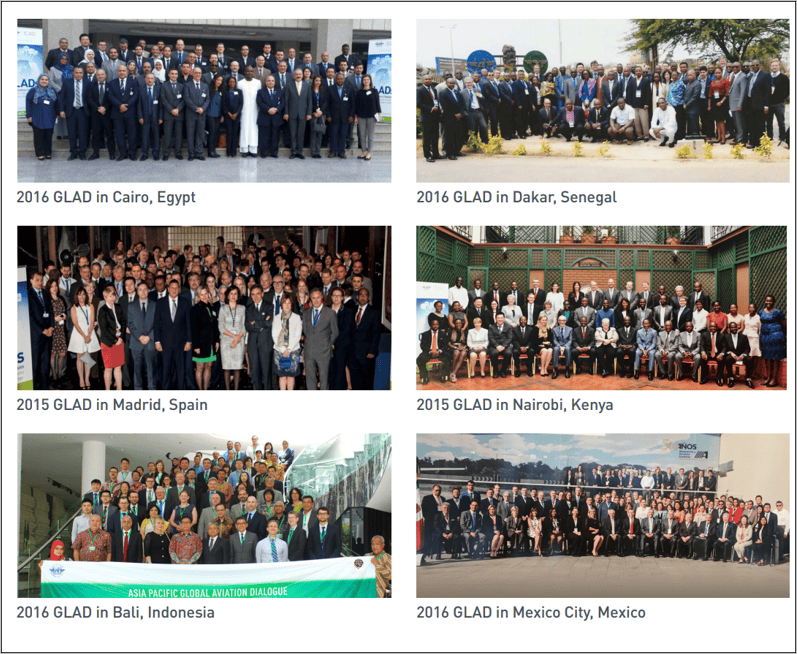
As CORSIA marks its 10th anniversary, this is an opportunity to revisit how it was designed and to look ahead to the priorities for its continued implementation and success.
CORSIA was adopted as complementary to the broader package of measures to help ICAO achieve one of its global aspirational goal, carbon-neutral growth from 2020 onwards (CNG2020). It complements in-sector CO₂ reduction measures, including technological and operational improvements and aviation cleaner energies, while providing for the use of CORSIA Eligible Emissions Units (CEEUs) to address remaining CO2 emissions. The name CORSIA reflects two important elements of the scheme: “offsetting” and “reduction”.
Offsetting involves the use of CEEUs, i.e. eligible carbon credits, by aeroplane operators to offset sectoral emissions above the scheme’s baseline to achieve CNG2020.
The reduction component allows operators to lower the sector’s emissions using eligible sustainable aviation fuels (SAF) and lower-carbon aviation fuels (LCAF), i.e., CORSIA Eligible Fuels (CEF).
Importantly, CORSIA has two distinct types of requirements.
- All States and their aeroplane operators are subject to CORSIA monitoring, reporting and verification (MRV) requirements for international aviation CO₂ emissions.
- Offsetting requirements apply only to emissions from international flights between CORSIA participating States that define routes subject to CORSIA offsetting, in accordance with the applicability provisions of Annex 16, Volume IV to the Convention on International Civil Aviation.
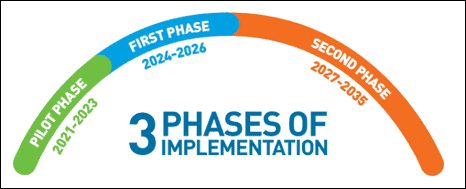
CORSIA has three phases: a pilot phase (2021 – 2023); a first phase (2024 – 2026); and a second phase (2027 – 2035). States’ participation in CORSIA offsetting is voluntary in the pilot phase (2021-2023) and first phase (2024- 2026). In the second phase (2027-2035), participation is determined by criteria based on States’ 2018 aviation activity, measured in revenue tonne-kilometres (RTK), in addition to voluntary participation of other States.
During CORSIA’s pilot and first phases, the international routes subject to offsetting requirements have consistently increased, based on States’ voluntary notifications (from 88 States in 2021 to 130 in 2026).
At the start of CORSIA’s second phase in 2027, 134 States will define the routes subject to offsetting requirements. This could bring potential coverage of international aviation CO₂ emissions subject to offsetting requirements under CORSIA to almost 90%.
Monitoring, Reporting and Verification (MRV) for CO2 Emissions
States whose aeroplane operators undertake international flights have been required to implement CORSIA MRV for CO₂ emissions from international flights since 1 January 2019, in line with the Standards and Recommended Practices contained in Annex 16, Volume IV. The data reported by States form the basis for calculating aeroplane operators’ offsetting requirements.
Through the robust implementation of the CORSIA MRV system, annual reporting of CO₂ emissions from international flights by States and operators now covers more than 99% of total annual CO₂ emissions.
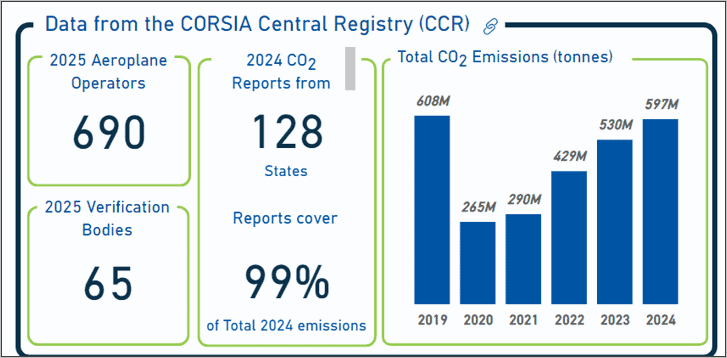
In 2020, the world faced one of the worst pandemics in modern times. COVID‑19 severely disrupted daily life, socio‑economic activity, and aviation. Because CORSIA was designed to meet the sector’s mid‑term global aspirational goal of CNG2020, the pandemic significantly distorted the CORSIA baseline. Adjustments were therefore needed to ensure that CORSIA could continue to function as intended. In 2022, the ICAO Assembly adopted Resolution A41‑22, adjusting the CORSIA baseline from its original level, which was based on the average of international aviation CO₂ emissions in 2019 and 2020, as follows:
- Pilot phase (2021–2023): total CO₂ emissions covered by CORSIA in 2019
- First and second phases (2024–2035): 85% of total CO₂ emissions covered by CORSIA in 2019[1]
Meeting CORSIA offsetting requirements
As international aviation recovered from the pandemic, 2024, the first year of CORSIA Phase 1 (2024–2026), marked the start of carbon offsetting requirements. CORSIA provides aeroplane operators with the option to reduce their offsetting requirements by claiming emissions reductions from CORSIA Eligible Fuels (CEF) (i.e. SAF or LCAF).
For an operator to claim these emissions reductions, the fuel must meet the CORSIA Sustainability Criteria and be produced by a fuel producer certified by an ICAO-approved Sustainability Certification Scheme (SCS). To claim emissions reductions from CEF, an operator will:
- inform the amount of CEF purchased, based on purchasing and blending records;
- use the ICAO approved life-cycle emissions values to determine the emissions reduction factors for each batch of CEFs;
- provide valid sustainability certification documentation; and
- report and claim the verified emissions reductions from CEFs to its State on an annual basis, or once for each three-year compliance period.
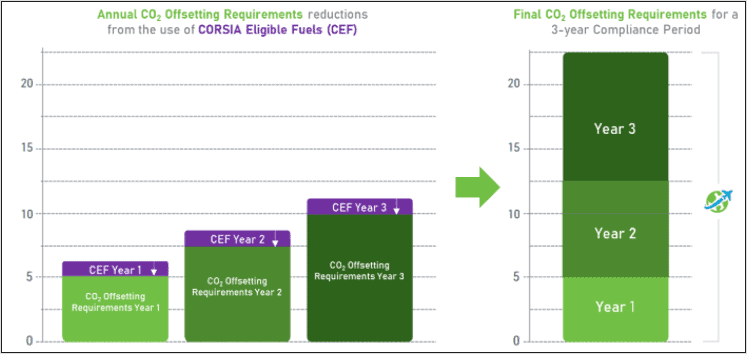 The State will calculate the operator’s total final offsetting requirements at the end of each compliance period by subtracting the emissions reductions from CEF from the operator’s offsetting requirements accrued during that period. Any remaining offsetting requirements, after accounting for CEF emissions reductions, must be met by the operator through the cancellation of CEEUs.
How CEF reduces offsetting requirements
In this way, operators can address their CORSIA offsetting requirements by using CEF, cancelling CEEUs, or through a combination of both.
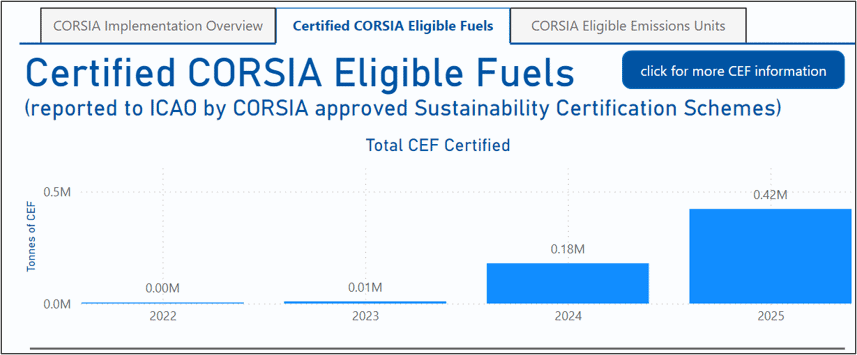
Scaling up the production of CEF remains costly, but CEF output more than doubled between 2024 and 2025, a promising sign that the energy sector is working to increase the availability of fuels that can be used by operators to reduce their CORSIA offsetting requirements.
Meeting offset requirements using CORSIA eligible emissions units
Only emissions units determined as eligible by the ICAO Council can be used to meet CORSIA offsetting requirements, i.e. CEEUs. CEEUs are eligible carbon credits approved by the ICAO Council based on recommendations from its Technical Advisory Body (TAB), following its assessment of programmes against the CORSIA Emissions Unit Eligibility Criteria (EUC).
CEEUs comes from emissions reductions achieved through various mechanisms, programmes or projects, and can be purchased by operators through the global carbon market.
Demand for CEEUs in global carbon markets has increased recently as aeroplane operators prepare to meet their offsetting requirements for the CORSIA first phase, ahead of the CEEU cancellation deadline on 31 January 2028. To date, the ICAO Council has approved 10 programmes to supply CEEUs for the first phase (2024-2026 compliance period), representing a potential pool of approximately 700 million to 1 billion eligible units for mitigation years 2021-2026.
However, there is an important distinction between the eligibility of emissions units and their actual availability in the market. Based on information currently reported in the registries of approved programmes, approximately 44 million emissions units are currently labelled as CORSIA eligible for the first phase. While this volume continues to grow, the gap between the potential supply of eligible units and those currently available highlights the need to accelerate the availability of CEEUs in global carbon markets, so that operators have access to sufficient units to meet their offsetting requirements.
One of the main challenges affecting the availability of units is obtaining a Host Country Attestation (Letter of Authorization), a requirement under the CORSIA EUC that provides an important safeguard against the double counting of units. Host country attestation (Letter of Authorization) must be obtained and made publicly available before emissions units can be used for CORSIA, and such attestation should meet the applicable requirements under the Article 6 of Paris Agreement. To support this process, host countries may use a voluntary standardized template published by the UNFCCC Secretariat to authorize CEEUs. A snapshot of the ICAO CEEU Tracker based on information from programmes’ registries.
Looking ahead: Strengthening CORSIA implementation
Ten years after its adoption, CORSIA has moved firmly from design to implementation. Its MRV system now provides near-complete coverage of international aviation CO₂ emissions reporting, while offsetting requirements have begun to take effect as sectoral emissions exceed the CORSIA baseline.
Based on assessments by ICAO’s Committee on Aviation Environmental Protection (CAEP), the international aviation sector is expected to meet ICAO’s mid-term global aspirational goal of CNG2020. The focus now is on strengthening implementation, particularly by scaling up CEF, increasing the availability of CEEUs, and safeguarding the globally harmonized approach underpinning CORSIA.
Scaling up CORSIA eligible fuels
Continued efforts are needed to scale up the development and deployment of CEF. Priorities include increasing the number of ICAO-approved SCS across all regions; accelerating the certification of qualifying SAF and LCAF; and advancing the development and approval of life-cycle emissions values for new fuel sources and pathways. Underpinning these efforts, the ICAO Assembly has called upon its Member States to recognize the CORSIA framework for sustainability certification of fuels, as the accepted basis for the eligibility of SAF, LCAF and other aviation cleaner energies used in international aviation. This provides the regulatory certainty necessary to scale up CEFs.
Increasing the availability of CORSIA eligible emissions units
Another key priority is accelerating the issuance of Letters of Authorization to facilitate the availability of CEEUs to aeroplane operators. Timely provision of host country attestation (through issuance of Letter of Authorization), together with increased market supply, will be important to meet growing demand as CORSIA implementation and coverage progress. ICAO continues to encourage and engage with States to support their timely issuance and help ensure that operators have sufficient access to eligible units to meet their CORSIA offsetting requirements.
Safeguarding a globally harmonized approach through CORSIA
Maintaining a globally harmonized approach will remain central to CORSIA’s continued implementation. The continued emergence of duplicative national and regional measures risks creating the patchwork that the ICAO Assembly sought to avoid in establishing CORSIA as the only global MBM applicable to CO₂ emissions from international aviation, to ensure that these CO₂ emissions are accounted for only once. Such developments risk undermining the extensive efforts and significant achievements made to develop and implement CORSIA. They also risk diverting focus and resources away from measures that directly reduce aviation CO₂ emissions, including SAF and LCAF, which require trillions of dollars in investments.
The ICAO Assembly has called upon ICAO and its Member States to express concerns regarding the emergence of duplicative MBMs, including aviation-related taxes and levies, particularly where such measures are intended to mobilize climate finance for sectors beyond international aviation (refer to ICAO Assembly Resolutions A42-21). Continued alignment with ICAO Assembly decisions is essential to safeguard the integrity of CORSIA and maintain an effective globally harmonized approach to addressing CO₂ emissions from international aviation.
 Conclusion
As we commemorate the 10th anniversary of the adoption of CORSIA, it is important to recall why CORSIA was established, what was agreed, how it works, and why it remains essential. Over the past decade, CORSIA has evolved from a global agreement into an operational system, strengthened through experience, continued refinement, collaboration and the shared commitment of States, the aviation sector and relevant stakeholders.
The next decade will be equally important. Scaling up the availability of CEF and CEEUs, broadening participation, maintaining a robust MRV system and safeguarding a globally harmonized approach will require sustained multilateral cooperation, long-term commitment and investment.
Ten years on, continued support for CORSIA will be essential to strengthen its implementation and preserve it as the globally harmonized approach for addressing CO₂ emissions from international aviation. For additional details, refer to the CORSIA periodic review here.
