Strengthened international cooperation will accelerate the decarbonization of air transport, and the new capacity-building programme we announced during ICAO Aviation Climate Week will support our long-term global aspirational goal of net-zero carbon emissions from international civil aviation by 2050 (LTAG). There were so many important topics covered, we’re sharing recordings of all of the discussions that took place here, on ICAO TV and links for all the recaps below.
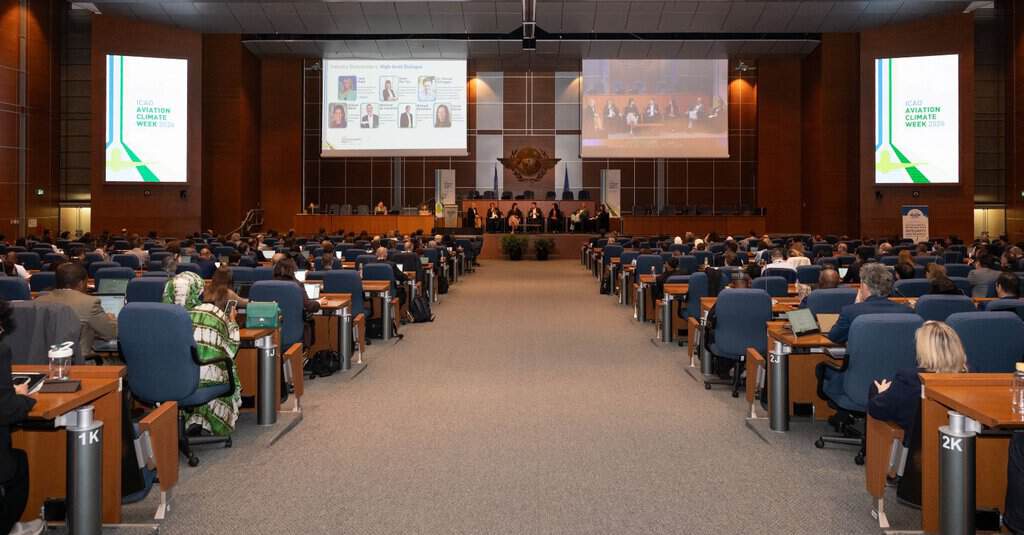
When he closed the event, ICAO Secretary General Juan Carlos Salazar declared that “multilateralism is aviation’s only pathway to net-zero carbon emissions by 2050 and the only way to respond urgently to the climate crisis.” He commended the delegates’ work, noting that “aviation has demonstrated the environmental leadership and innovation that other industries look to for inspiration.”
More than 500 participants from governments, industry, financial institutions and international organizations gathered at ICAO’s headquarters to address the climate crisis facing aviation. Held under the theme One Global Path: Advancing Net-Zero Aviation, the consensus among participants was that while approaches to decarbonization may differ, efforts must remain harmonized and coordinated under ICAO in support of the LTAG, as agreed by States at the ICAO Assembly in 2022.
 Participants emphasised that scaling up cleaner energy remains a central objective. They called for stronger policy frameworks under the Carbon Offsetting and Reduction Scheme for International Aviation (CORSIA), expanded support and funding for sustainable aviation fuels and cleaner energies through the ACT-SAF programme, and increased financing through mechanisms like the ICAO Finvest Hub. By forming broader partnerships and creative financing, industry, regulators, and financiers can boost investment in both ACT-SAF and make aviation decarbonization projects more bankable.
Delegates highlighted the need for increased capacity-building and wider access to eligible fuels and emissions units as ICAO prepares for a new phase of CORSIA in 2027, which is aviation’s only global market-based measure and a key tool supporting carbon-neutral growth. Concerns were also expressed over overlapping external proposals for aviation taxation, and especially its impact on the socio-economic development of small island developing States.
Operational improvements were recognized for their immediate potential to reduce emissions, while delegates highlighted that important technological innovations will require the continued development of harmonized international standards through ICAO.
ICAO responded to building the momentum by launching the Assistance, Capacity-building and Training for LTAG programme (ACT-LTAG). This new effort aims to help countries develop and update State Action Plans across all elements of the ICAO basket of aviation CO2 mitigation measures to support the LTAG, building upon existing ICAO roadmaps and programmes and in collaboration with regional initiatives and platforms. It will now provide practical training and expert advice, helping States measure emissions reduction efforts, secure climate finance, and participate in joint planning and partnerships at regional and global levels. The programme is also expected to enhance monitoring systems, allowing for better tracking of the LTAG progress.
We are sharing the recordings of the Aviation Climate Week 2026 discussions on ICAO TV. The sessions provide valuable insights into the policies, technologies, partnerships, and financing mechanisms that will help us advance global aviation’s environmental objectives. To find the sessions that most interest you, open the event programme shared below. For a recap on the discussions that took place each day, click on these links: