
Airports are increasingly transforming from passive energy consumers into active energy producers and managers. As part of the aviation sector’s broader commitment to decarbonization, many airports have invested in renewable energy sources, particularly solar photovoltaic systems. The intermittent nature of renewable generation can create operational challenges for facilities that require a continuous and reliable power supply.
Energy Storage Systems (ESS), particularly Battery Energy Storage Systems (BESS), are emerging as a key solution when it comes to these types of challenges. By storing excess renewable electricity and making it available when needed, these systems help airports maintain energy reliability while reducing dependence on conventional power sources.
Renewable energy creates new opportunities and challenges
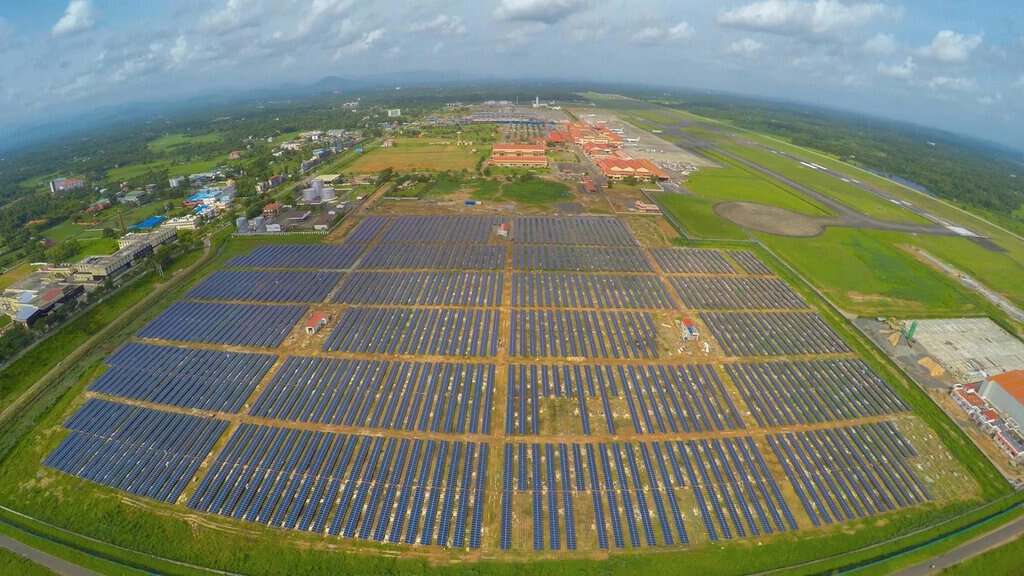
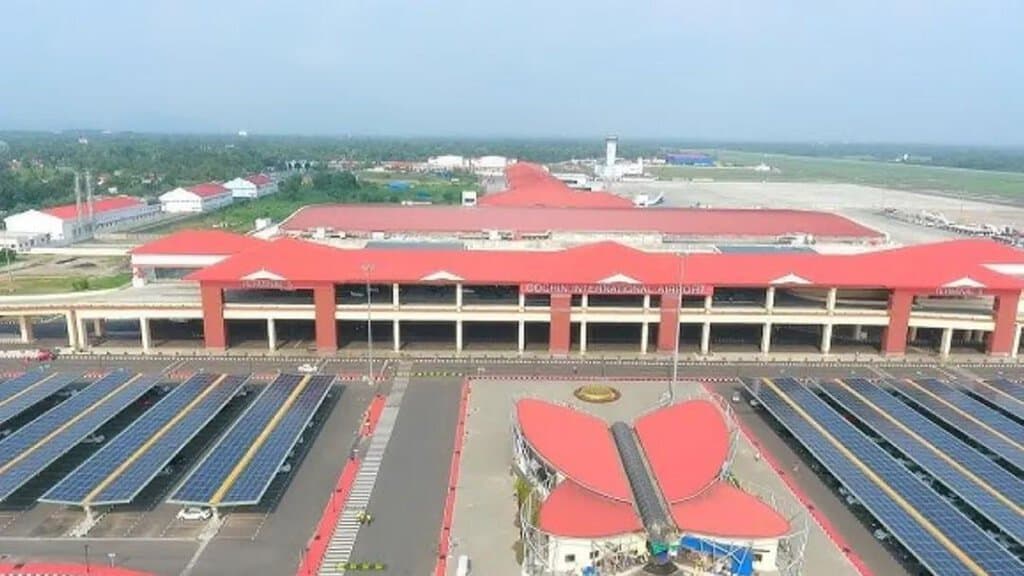
The growing deployment of renewable energy at airports demonstrates the sector’s commitment to sustainability. A leading example is Cochin International Airport in India (pictured above and below), which became the first airport in the world to operate entirely on solar energy. Through extensive investment in photovoltaic infrastructure, the airport has significantly reduced its carbon footprint while meeting its operational electricity needs.
While this achievement demonstrates the viability of renewable energy in airport operations, it also highlights an important limitation. Solar power generation is concentrated during daylight hours, whereas airports operate continuously. As a result, energy production and energy demand do not always coincide, creating a need for technologies capable of balancing supply and consumption.
Rome Fiumicino: Energy storage in practice
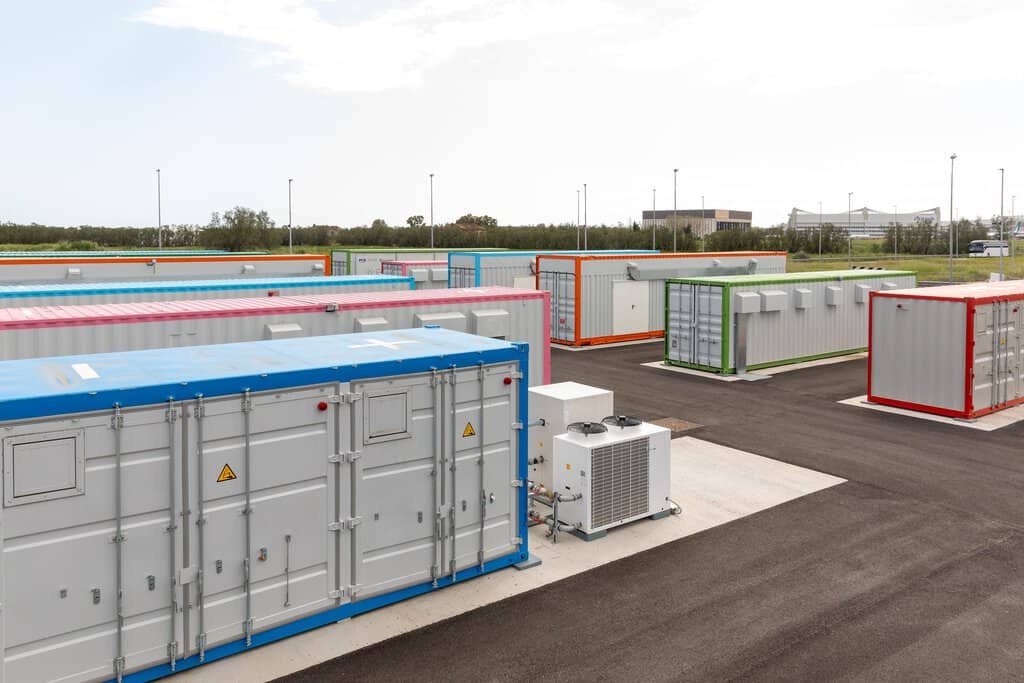
Rome Fiumicino Airport (pictured below) provides a valuable example of how energy storage can complement renewable energy systems. As part of its sustainability strategy, the airport has developed a large-scale solar energy programme supported by the Pioneer project, a Battery Energy Storage System with a capacity of 2.5 MW and 10 MWh.
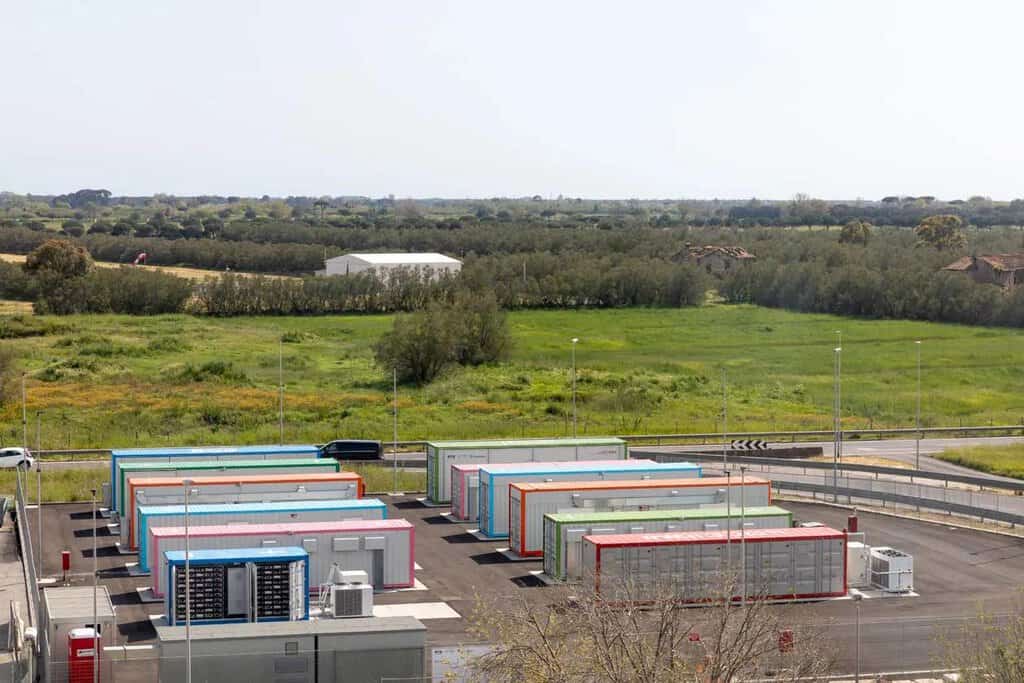
One of the project’s most innovative features is the use of second-life electric vehicle batteries that have been repurposed for stationary energy storage applications. This approach not only improves energy management but also supports circular economy principles by extending the useful life of battery materials.
The system stores surplus electricity generated during periods of high solar production and releases it when demand increases or renewable generation declines. In doing so, it enhances energy reliability, improves the utilization of renewable energy and contributes to overall infrastructure efficiency.
Supporting the electrification of airport operations
The role of energy storage is becoming increasingly important as airports electrify their ground operations. Across the aviation sector, diesel-powered ground support equipment is gradually being replaced by electric alternatives, including baggage tractors, passenger transport vehicles, maintenance fleets and service equipment.
This transition introduces new electricity demand patterns and may create peak-load pressures on airport energy networks. Energy storage systems help mitigate these challenges by enabling load shifting, reducing peak demand and improving the synchronization between renewable energy generation and operational consumption.
Looking ahead, future developments such as electric aircraft technologies and hydrogen production facilities are expected to further increase airport electricity requirements, reinforcing the need for advanced energy management solutions.
Enhancing operational resilience
Beyond environmental considerations, energy storage is increasingly recognized as a critical component of airport resilience. Airports depend on uninterrupted electricity supplies to support essential systems such as runway and taxiway lighting, navigation aids, communication networks, security systems, meteorological services and passenger terminal operations.
Traditionally, airports have relied on diesel generators for emergency backup power. While these systems remain important, battery storage offers a complementary capability through its ability to respond almost instantaneously to power interruptions. This rapid response helps maintain continuity of operations while conventional backup systems are activated.
As airports become more digitalized and dependent on automated systems, the ability to prevent even short-duration power disruptions is becoming increasingly important.

Airports as future energy hubs
The combination of renewable energy generation and energy storage is driving a broader transformation in airport energy management. Airports are gradually evolving into integrated energy hubs capable of generating, storing and actively managing electricity within their operational boundaries.
This evolution is fostering the development of airport microgrids that combine renewable energy sources, battery storage systems, backup generation and intelligent energy management platforms. Such systems improve energy efficiency, reduce vulnerability to external grid disruptions and provide greater operational flexibility.
These capabilities will become increasingly important as airports prepare for future technologies, including electric aircraft, hydrogen infrastructure and more sophisticated digital operations.
Implications for airport planning and policy
The growing adoption of energy storage systems has important implications for airport operators and policymakers. Rather than being viewed solely as sustainability initiatives, ESS should increasingly be considered core infrastructure assets that contribute to operational continuity, energy security and long-term development objectives.
Integrating energy storage into airport master planning can help strengthen resilience, support renewable energy deployment and facilitate future electrification strategies. It may also encourage the development of common technical approaches for airport microgrids and distributed energy systems across different jurisdictions.
Conclusion
Energy Storage Systems are rapidly evolving from innovative sustainability technologies into essential components of modern airport infrastructure. Experiences at airports like Cochin International Airport and Rome Fiumicino Airport demonstrate that energy storage can improve renewable energy utilization while strengthening operational resilience and infrastructure performance.
As airports continue their transition toward net-zero operations, energy storage will play an increasingly central role in enabling reliable, efficient and sustainable energy management. More broadly, it supports the emergence of airports as integrated energy hubs capable of meeting the operational and environmental challenges of the future.
