In 2023, the UN General Assembly (resolution A/77/327) proclaimed 26 January as the International Day of Clean Energy to raise awareness and mobilize action toward a just and inclusive transition to clean energy, for the benefit of the people and the planet. As the international community commemorates the third International Day of Clean Energy on 26 January 2026, this article focuses on how ICAO is advancing implementation support to ensure an inclusive transition towards cleaner energy in aviation.
This transition has long been identified by ICAO and the aviation sector as an important means of addressing aviation emissions, dating back to the first ICAO Conference on Aviation and Alternative Fuels (CAAF/1) held in 2009. Since then, under ICAO’s leadership, the international aviation sector has made significant progress in accelerating this transition. This includes the adoption of the ICAO Global Framework for Sustainable Aviation Fuels (SAF), Lower Carbon Aviation Fuels (LCAF) and other aviation cleaner energies at CAAF/3 in 2023. Aviation’s cleaner energy transition was also a focus of ICAO’s engagements at the recently concluded COP30.
In this video, we’re sharing a concise overview of aviation’s cleaner energy transition:
Implementation support is one of the four building blocks of the ICAO Global Framework alongside policy and planning, regulatory framework and financing. Recognizing that achieving the sector’s collective long-term aspirational goal (LTAG) of net-zero carbon emissions by 2050 requires a robust, targeted and tailored capacity-building and implementation support, ICAO launched the Assistance, Capacity-building and Training for Sustainable Aviation Fuels (ACT-SAF) programme in 2022. ACT-SAF provides targeted support to ICAO Member States, enabling them to participate fully in the deployment of SAF and other cleaner energy solutions in the global transition to sustainable aviation, ensuring that no country is left behind.

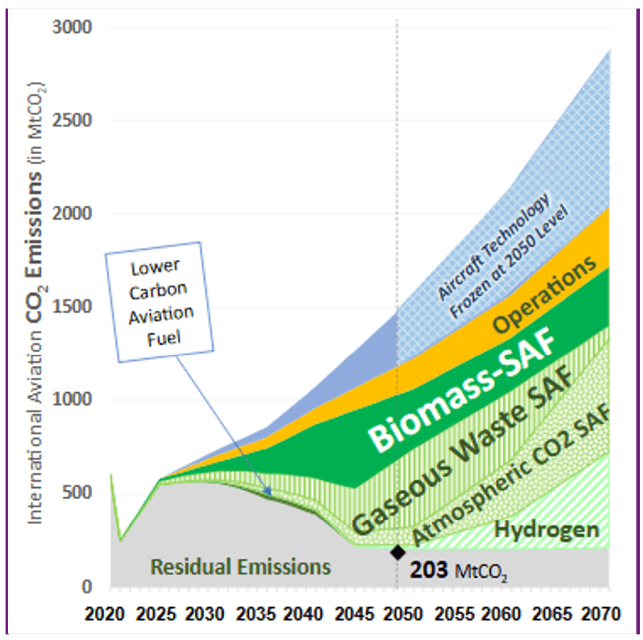
As detailed in ICAO’s landmark 2022 LTAG Report, SAF and other cleaner energies are the biggest lever for reducing aviation carbon emissions to achieve carbon neutrality by 2050. Tackling the carbon intensity of aviation’s energy will go hand in hand with improvements to aircraft technology, operational efficiency and market-based measures.
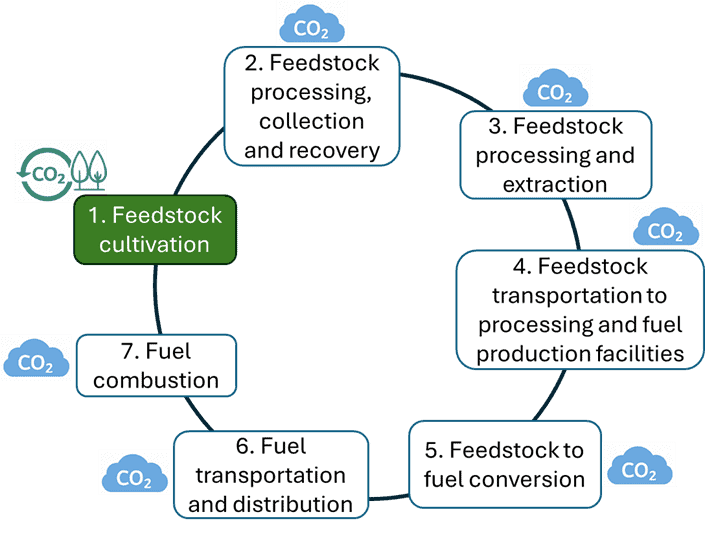
SAF contributes to aviation decarbonization through a lifecycle approach. The fuel itself is (almost) the same as conventional fossil jet fuel. That allows it to be used as a drop-in replacement, certified for up to 50% blends today without changing any aircraft or infrastructure.
Burning SAF will still release CO2 into the air, but the difference with fossil fuel is that it is earlier in its lifecycle. SAF is made from alternative sources (feedstocks) such as crops, waste streams or renewable electricity. The carbon used for SAF production would otherwise have gone into the atmosphere, for example from dead trees that rot. The amount of CO2 reduction linked to a volume of SAF is highly dependent on the feedstock used and can be close to 100%.
SAF projects promise to create jobs, stimulate local economies, and enhance energy security across the globe by shifting to new sources of energy and carbon to produce jet fuel. The sustainability requirements embedded in ICAO’s Carbon Offsetting and Reduction Scheme for International Aviation (CORSIA) safeguard impacts across all the UN Sustainable Development Goals (SDGs) such as biodiversity and food security.
Why we need to act
Scaling up SAF is a significant challenge in all parts of the world. More complex supply chains and novel technologies lead to a price premium compared to the conventional jet fuel we use today. ICAO’s CORSIA and national policies help address the price gap by putting a value on the environmental benefit SAF provides.
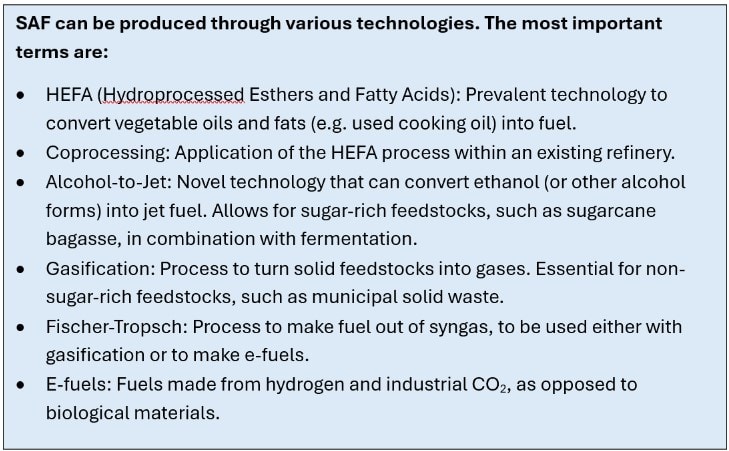
ACT-SAF helps all regions realize their full potential for SAF through a comprehensive platform that combines:
- Feasibility studies & business implementation studies for SAF in member states.
- Other forms of direct support, including training sessions, support for regulatory development and the ACT-SAF Accelerator.
- The Knowledge Hub combining global resources and ICAO’s successful webinar series.
- The overall platform highlighting activities from ICAO and our 280+ ACT-SAF partners.
Long-standing webinar series
Since 2022, ICAO has hosted 22 episodes of the ACT-SAF Series of online trainings, with topics ranging from ICAO and national policies, technologies and logistics to green finance. The most recent episode, aired on 22 January addressed CORSIA rules for electricity sourcing for SAF production. All episodes are available on ICAO.TV.
Detailed national support through SAF feasibility and business implementation studies
In consultation with ACT-SAF partners, ICAO developed templates for two types of in-depth studies supporting member states. SAF feasibility studies focus on feedstock availability in the state, assessing how much SAF could be produced from the bottom-up in accordance with CORSIA sustainability criteria. Another key element is the drafting of a national action plan for public and private stakeholders.
SAF business implementation studies form the next step up. Based on previous analyses, they zoom in on one or several specific business cases for SAF production in the state and provide a detailed techno-economic assessment. This prepares the state and its key stakeholders for the development of real, viable projects that they can submit to the ICAO Finvest Hub.
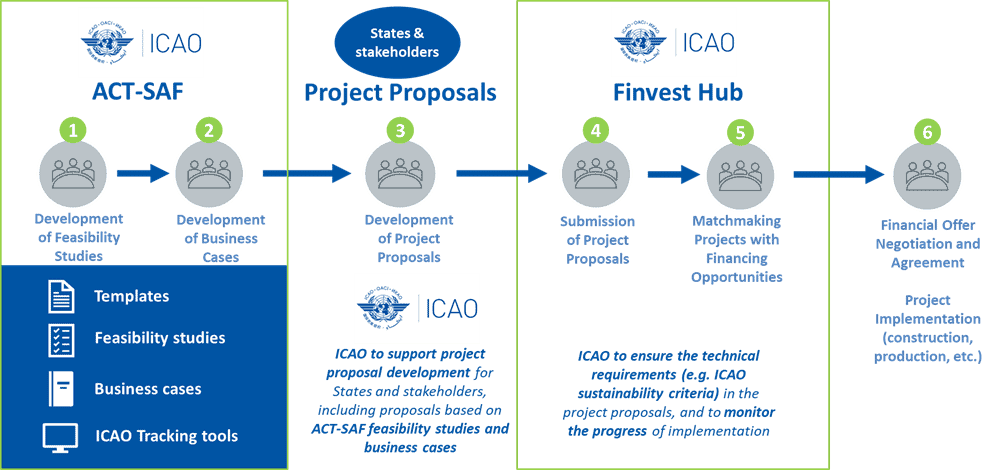
ICAO ACT-SAF studies are entirely funded by donations from states and organizations. To date, activities have been made possible by contributions from the European Union, France, the Netherlands, United Kingdom, Austria, Airbus, Italy, Switzerland and Volaris.
ICAO aims to complete 50 SAF feasibility and business implementation studies by the end of 2028. By January 2026, 15 studies have been completed and 18 are underway.
2025 highlights
In 2025 five ICAO ACT-SAF studies were published, with some details below:
Chile
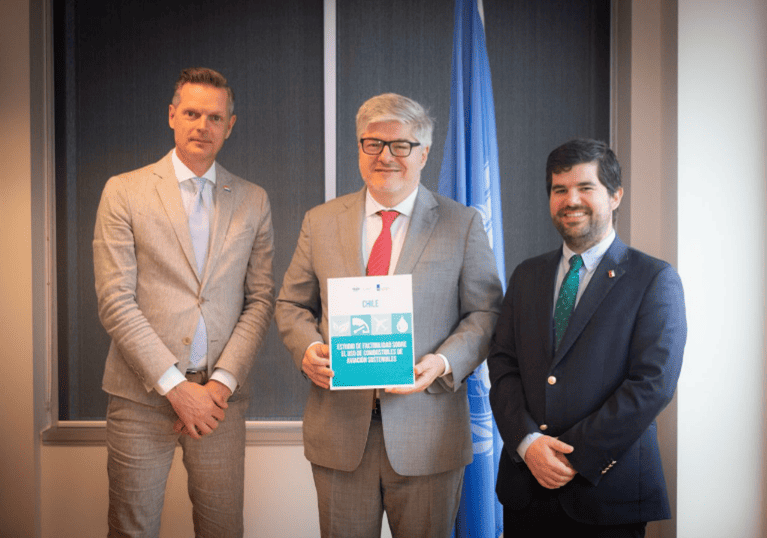
The short-term potential until 2030 hinges on co-processing of used cooking oil (UCO). This cost-effective solution, making use of the country’s existing jet fuel refineries, can provide 4% SAF for Chile’s aviation sector by 2030.
Between 2030 and 2035 the production of e-fuels from green hydrogen is expected to be feasible, capitalizing on Chile’s renewable energy potential, as well as gasification of municipal solid waste (MSW) and agricultural residues. Further down the line, Alcohol-to-Jet is also expected to come into play. Building on this timeline, the study includes a roadmap towards a 50% SAF blend in 2050.
ICAO has announced the follow-up through a business implementation study in 2026, which will be funded by the Netherlands just as the feasibility study was.
Ethiopia
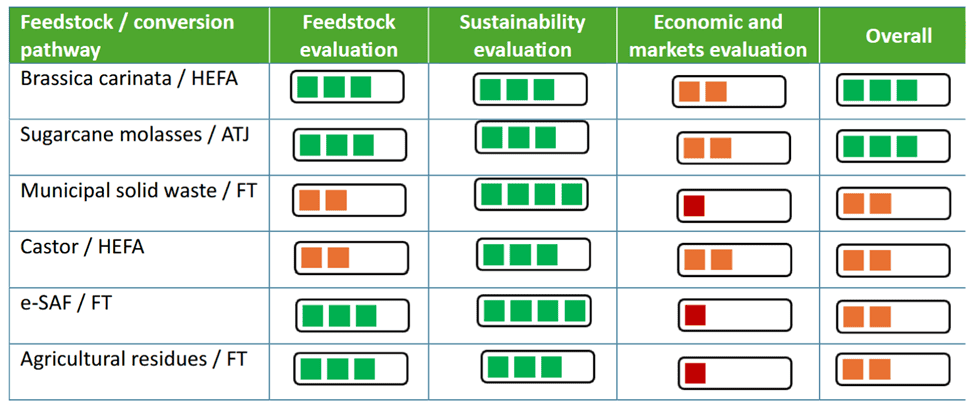
The feasibility study for Ethiopia, funded by the European Union, builds upon the 2021 national SAF Roadmap. Two main feedstocks were identified. Brassica carinata or Ethiopian mustard is an oilseed crop, allowing the oil to be processed and used in the commercially mature HEFA process. Additionally, molasses, a by-product from sugarcane cultivation, can be fermented for the AtJ process.
ICAO is currently undertaking a follow-up business implementation study, funded by France.
India
India has a large potential for SAF production, with a main focus on agricultural residues in the form of sugarcane bagasse and rice straw. The total SAF potential demonstrated across two scenarios was 14 – 33 million tonnes per year. By contrast, a 60% SAF blend for all flights from India in 2050 would require just 11.8 million tonnes of SAF. In the longer term there is also a high potential for e-fuels, which was not included in the quantified estimates.
The feasibility study for India, funded by the European Union, was delivered to the minister on 3 September.

Jordan
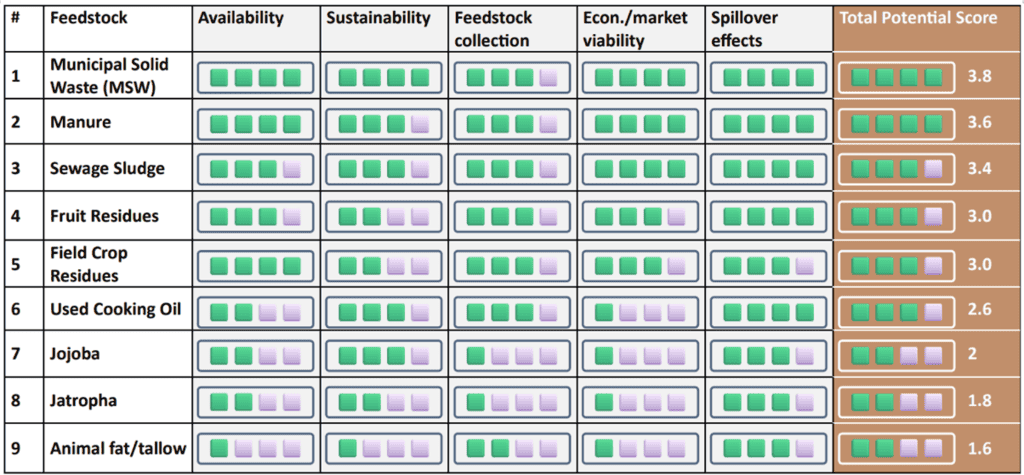
The feasibility study for Jordan, funded by the Netherlands, was delivered in Amman on 16 December. The key potential identified is based on various waste streams: municipal solid waste, sewage sludge, manure and various agricultural residues such as olive pits. Unlocking this potential will depend on progress in scaling up novel SAF pathways with gasification being the key, followed by alcohol-to-jet. In the longer term there is potential for e-fuels from abundant sunlight.
ICAO is now seeking partners to initiate a business implementation study in Jordan.
Kenya
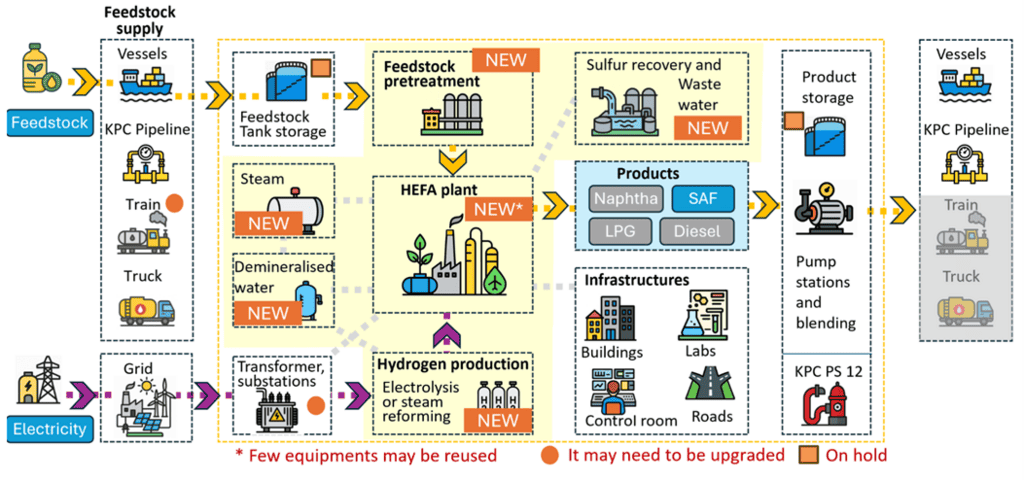
ICAO’s first published business implementation study, funded by the Netherlands, was delivered on 25 November during Kenya’s 4th national SAF Steering Committee meeting. This study provides an in-depth analysis of the dormant refinery in Mombasa, and the potential to re-use part of the existing assets for SAF production. Though many new assets will be necessary, the site promises a significant competitive advantage over greenfield development and SAF production in Mombasa can be competitive in international markets. In conclusion the country is well-positioned to become a regional SAF hub, capitalizing on its strategic location and diverse feedstock potential.
Global partnerships and funding
ACT-SAF now counts over 280 partners including many member states and organizations. Some of these partners are actively deploying their own capacity-building efforts to contribute to the programme objectives following the established ACT-SAF templates. For example, EASA is undertaking feasibility studies in Morocco and Nigeria, while Airbus has completed one in the Philippines. ICF, funded by the UK, is organizing multiple in-person training events in Southern Africa. Finally, Brazil welcomed a delegation from Angola for a multi-day training, linked to both ACT-SAF and its sister programme ACT-CORSIA.
Participation in ACT-SAF is open to ICAO member states, organizations and other stakeholders interested in taking action to develop SAF initiatives. For those interested in further information, an e-mail can be sent to the Office of Environment (officeenv@icao.int).
2028 on the horizon
The ACT-SAF programme is a cornerstone of ICAO’s efforts to achieve a Vision of 5% CO2 reduction by 2030 through cleaner energies, forming the pillar of implementation support. ICAO aims to complete 50 feasibility and/or business implementation studies by 2028. More voluntary contributions by our partners are needed to achieve this target in support of SAF development in all regions.
By 2028 ICAO will organize the fourth Conference on Aviation Alternative Fuels (CAAF/4), which will take stock of the programme’s results and progress to realizing SAF production in each of ICAO’s regions.