Against the backdrop of intensifying global efforts to address climate change, ICAO participated in the thirty-first Conference of the Parties of the UNFCCC (COP31) held in Antalya, Türkiye, from 9 to 22 November 2026, to highlight how international aviation is advancing climate action through a globally harmonized approach under ICAO’s leadership. Through a series of ICAO side events, side events by States and partners, bilateral engagements and technical submissions, we showcased progress across aviation decarbonization and environmental protection initiatives. These activities also strengthened collaboration with governments, UN agencies, international organizations, and industry partners to accelerate the implementation of solutions that support aviation’s transition towards net-zero carbon emissions.
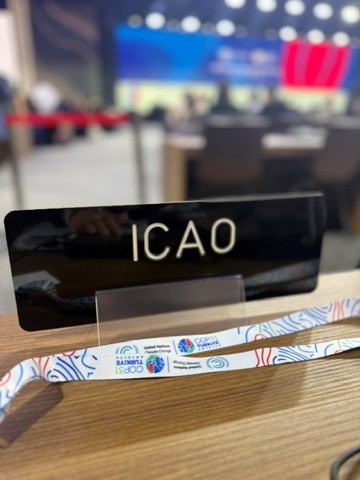
Our submission and statement to SBSTA65 is available here. In this statement, we highlighted the progress made under the ICAO Global Framework for Sustainable Aviation Fuels (SAF), Lower Carbon Aviation Fuels and other Aviation Cleaner Energies, while emphasizing that significantly accelerated implementation will be needed to achieve the sector’s long-term global aspirational goal (LTAG) of net-zero carbon emissions by 2050.
Looking ahead, ICAO emphasized that the second phase of the ICAO Carbon Offsetting and Reduction Scheme for International Aviation (CORSIA), beginning in 2027, will require continued commitment from States, increased production of CORSIA Eligible Fuels, greater availability of CORSIA Eligible Emissions Units, and timely Host Country Attestation (Letter of Authorization).
We also underscored that aviation decarbonization cannot be achieved without substantial financing and called for climate finance discussions and initiatives to support, rather than undermine, aviation decarbonization efforts and the implementation of ICAO’s globally agreed framework.
ICAO Side Events at COP31
- UN Decade of Sustainable Transport: Accelerating Sustainable Aviation Through UN System Synergies
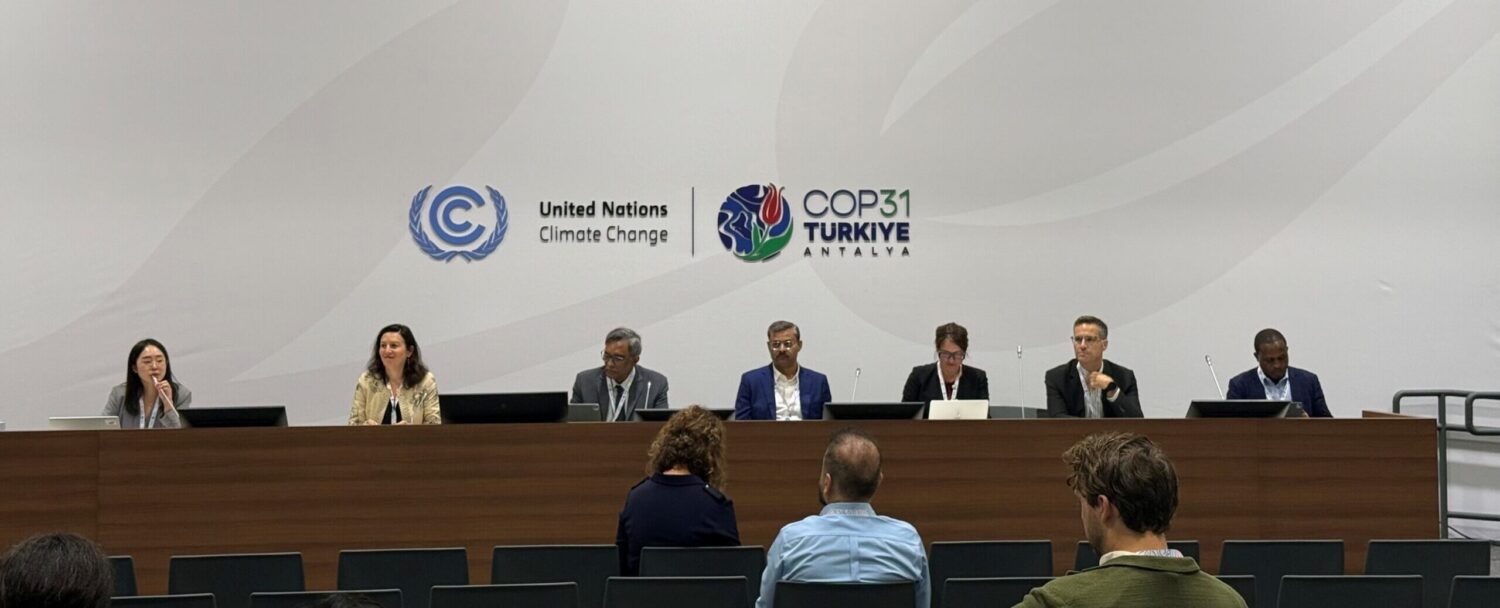
Setting the stage for our engagement at COP31, ICAO hosted a side event on the opening day titled UN Decade of Sustainable Transport: Accelerating Sustainable Aviation Through UN System Synergies. Held in the inaugural year of the UN Decade of Sustainable Transport (2026-2035), the discussion brought together leaders from the aviation, transport, energy, environment and tourism communities to examine how stronger partnerships, coordinated policies and aligned investments can accelerate aviation decarbonization while advancing broader sustainable development objectives.
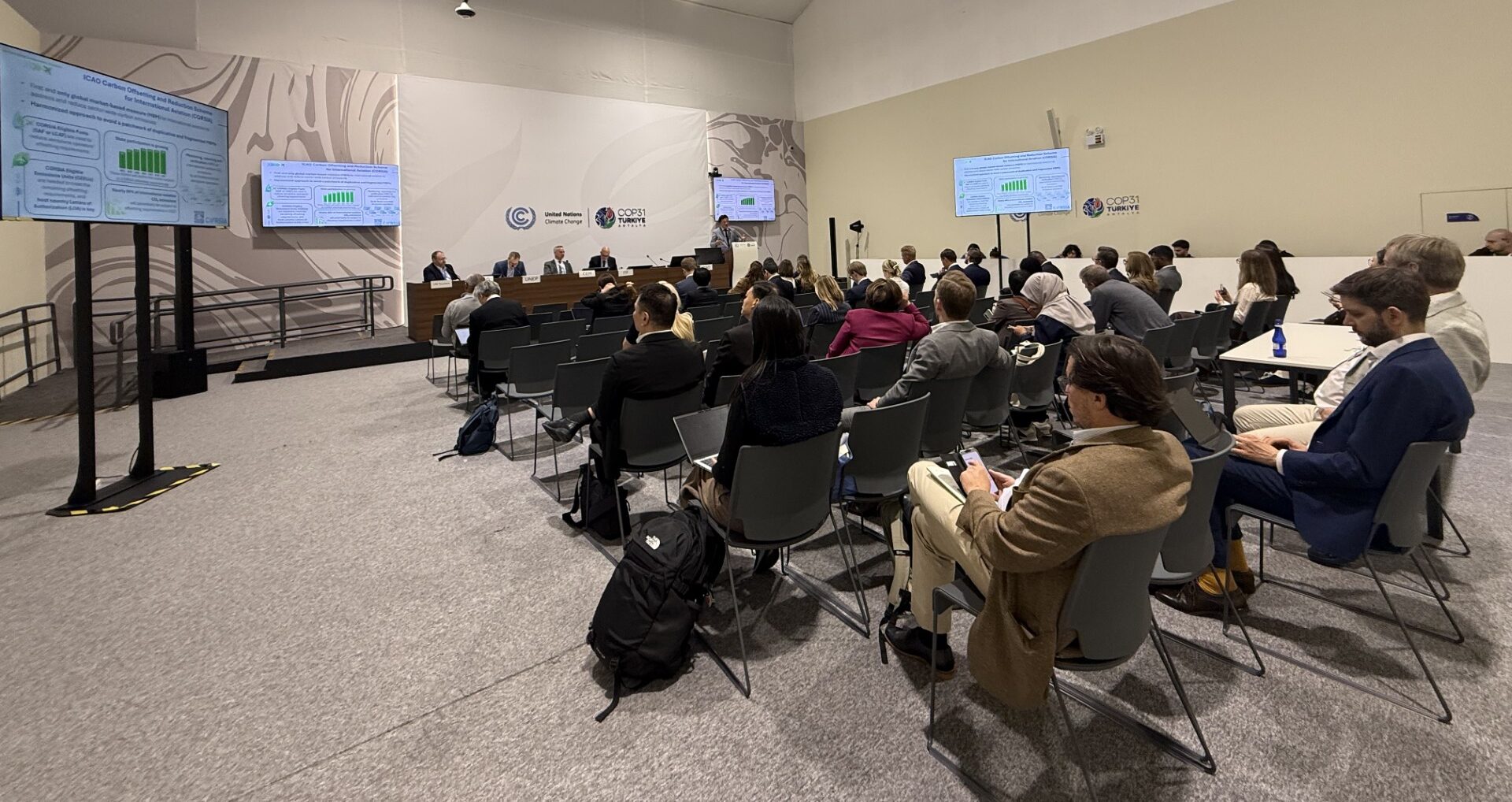
During the discussion moderated by Mr. Tetsuya Tanaka, Envoy of the ICAO Secretary General to the UNFCCC, speakers from the Clean Energy Ministerial (CEM), International Transport Forum (ITF), UN Environment Programme (UNEP), UN Tourism and Air Transport Action Group (ATAG), emphasized that advancing aviation environmental protection will require closer cooperation across the transport, energy, finance and tourism sectors.
Speakers stressed that scaling up aviation cleaner energies will depend on coordinated policies, harmonized sustainability frameworks, stronger investment signals and partnerships that connect the aviation industry, fuel producers, governments, financiers and international organizations. A recurring theme was the need to move away from siloed approaches and adopt a systems-wide perspective that links aviation decarbonization with broader energy transition efforts. Discussions also highlighted the importance of resilience in transport planning, with speakers noting that climate impacts, geopolitical disruptions and supply-chain vulnerabilities are increasingly affecting global transport.
“We cannot have a silo discussion when it comes to aviation decarbonization. We need a good connection between the aviation, energy, finance, transport, tourism and wider community”
Beyond fuels, it was emphasized that sustainable aviation should take a lifecycle approach, incorporating circular economy principles such as waste reduction, resource efficiency and sustainable plastics management across the aviation value chain.
The links between aviation and tourism were also highlighted as air connectivity remains essential for tourism development and economic growth, particularly for island and remote destinations, and that greater coordination between aviation and tourism stakeholders will help advance decarbonization and climate adaptation objectives.
2. From Waste to Wings: Advancing Circular Economy Solutions for Sustainable Aviation
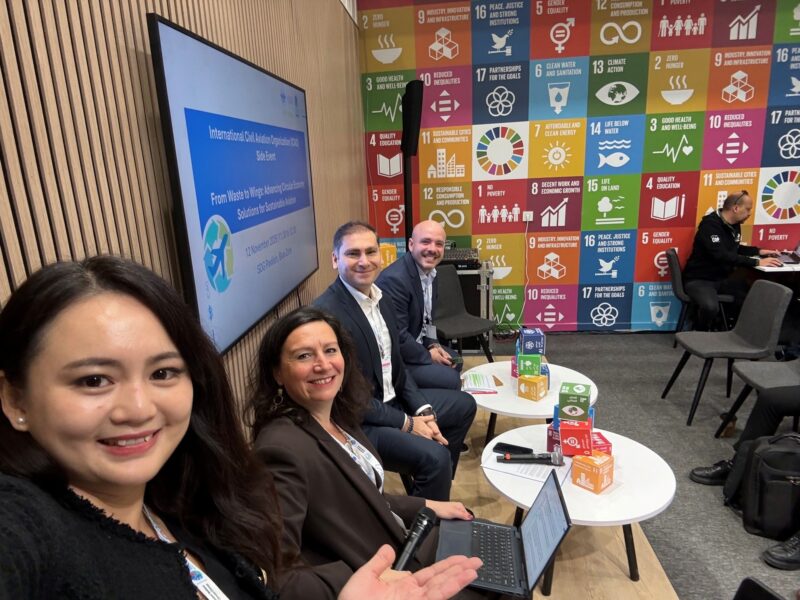
We organized our second dedicated side event, From Waste to Wings: Advancing Circular Economy Solutions for Sustainable Aviation, on 12 November 2026 in the Sustainable Development Goals (SDG) Pavilion.
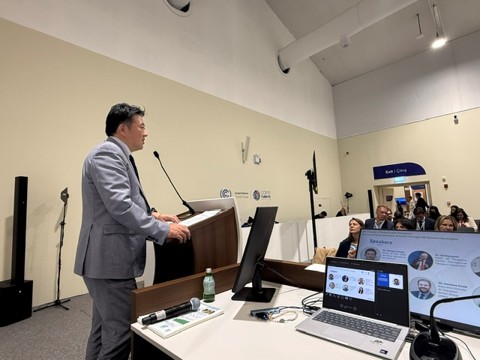
Examples from İGA Istanbul Airport demonstrated how sustainability can be embedded into airport planning and operations through investments in renewable energy, water reuse, waste management and operational efficiency. The importance of supportive regulatory frameworks was underscored to enable the reuse and recycling of materials.
A key message throughout the discussion was that addressing aviation waste requires a system-wide approach, combining infrastructure investment, regulatory reform, harmonized standards and coordinated action across the aviation ecosystem. Speakers further highlighted the potential for waste and residue streams to contribute to SAF production, while recognizing the importance of scaling up SAF production capacity and sustained policy support.
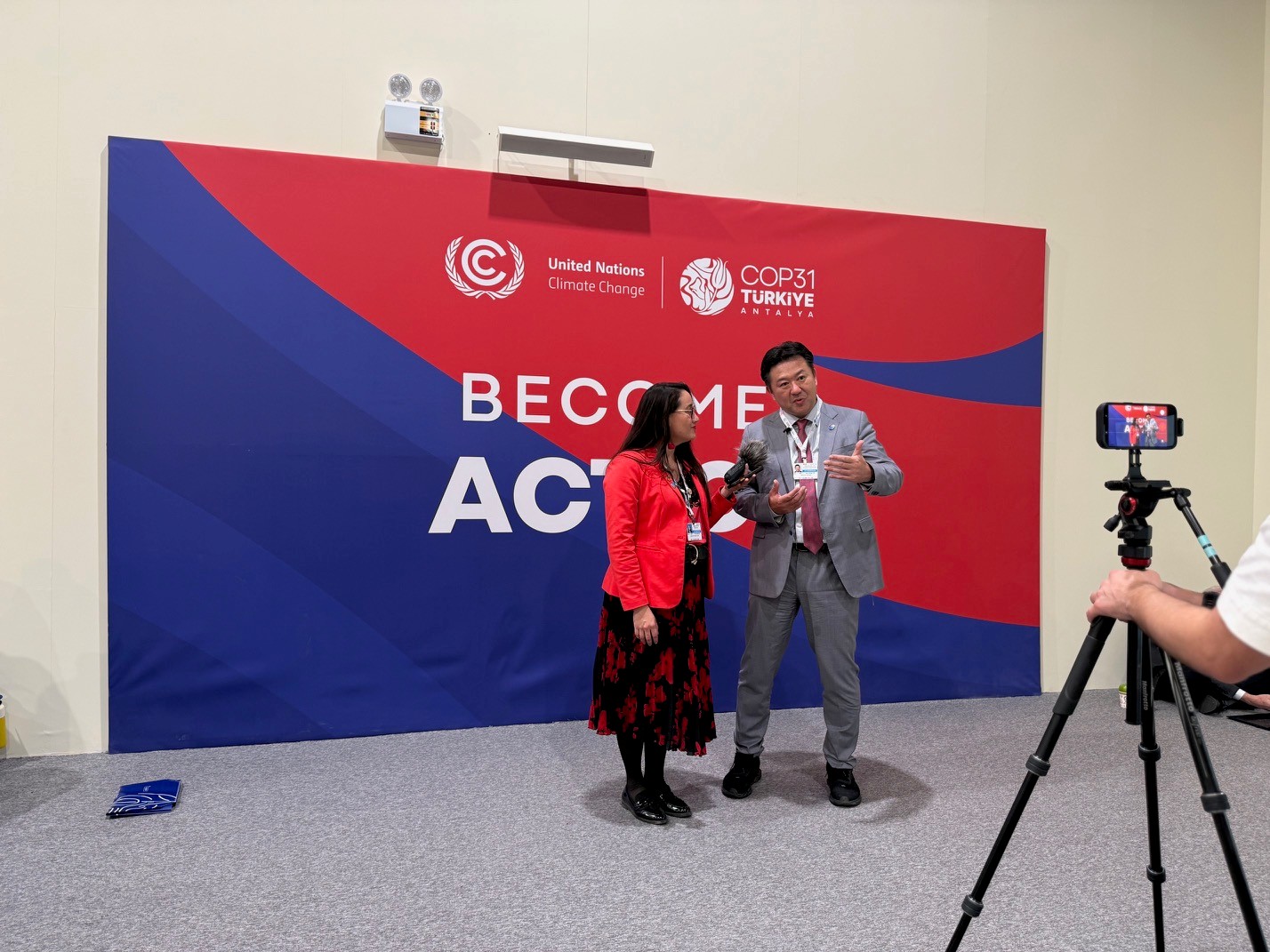
On the sidelines of COP31, Mr. Tetsuya Tanaka also spoke with UN News on the challenges and opportunities facing international aviation’s transition to net-zero carbon emissions. He highlighted the vital role of aviation, while acknowledging the sector’s environmental challenges and the actions being taken to address them. He shared how ICAO and our 193 Member States are advancing LTAG through the scale-up of Sustainable Aviation Fuels (SAF), Lower Carbon Aviation Fuels and other Aviation Cleaner Energies, supported by global cooperation, capacity-building and implementation efforts.
ICAO’s Engagements at COP31
We participated in eight other COP31 side events, highlighting both the progress achieved and the challenges that remain in advancing sustainable aviation. Discussions covered a range of topics, including sustainable airport and air cargo operations, accelerating the development and deployment of aviation cleaner energy solutions, and advancing the implementation of CORSIA.
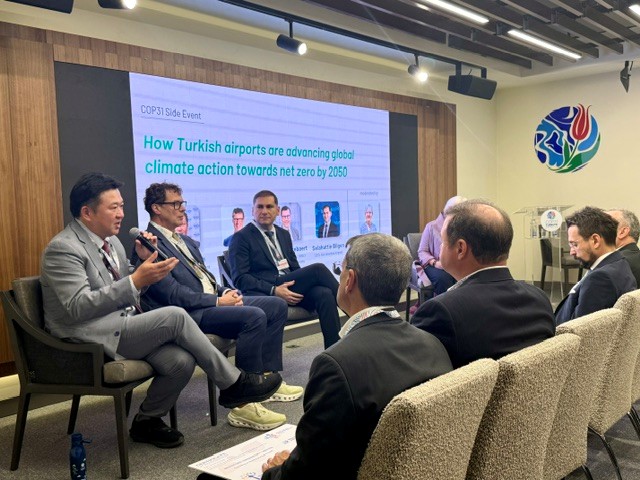
On 10 November, ICAO spoke at the Airports Council International (ACI) Europe event, Taking Airport Climate Action to the Next Level: From Türkiye to the World. Discussions explored how airports are advancing climate action through infrastructure modernization, operational efficiencies, renewable energy deployment and support for aviation decarbonization. We highlighted the important role of airports in achieving aviation’s environmental objectives and facilitating the scale-up of aviation cleaner energies.
Later that day, ICAO joined the Global Sustainable Aviation Forum, organized by ATAG, Turkish Airlines, the Zero Waste Foundation and the COP31 High-Level Champion. The event brought together leaders from government, industry and international organizations to discuss pathways for accelerating aviation’s transition towards net-zero emissions. Discussions focused on SAF, investment needs, technology development and the importance of a globally coordinated approach to aviation climate action led by ICAO.
Also on 10 November, ICAO participated in the event on The Future of Sustainable Air Cargo: From Innovation to Decarbonization, organized by MNG Airlines. We highlighted ongoing efforts to support the decarbonization of the aviation sector, including cargo services, through a globally harmonized approach under our leadership. This includes scaling up aviation cleaner energies, supporting the effective implementation of CORSIA, and advancing comprehensive LTAG monitoring and reporting, complemented by capacity-building activities and implementation support.
On 11 November, ICAO contributed to the UN Department of Economic and Social Affairs (DESA) event on UN Decade of Sustainable Transport 2026-2035 and Climate Action, picking up the discussion from the earlier ICAO side event on this topic. The conversation focused on how transport systems can contribute to global climate goals while supporting economic development and connectivity. ICAO emphasized the role of international aviation within the newly launched UN Decade of Sustainable Transport, the ongoing efforts and progress made by the sector to advance sustainable aviation under ICAO’s leadership, and highlighted the importance of collaboration across the transport, energy, finance and development communities to accelerate implementation.
Later that day, we participated in the event on Advancing Indonesia’s Sustainable Biofuel Ecosystem: Balancing Energy Security and Decarbonization, organized by Indonesia’s Coordinating Ministry for Infrastructure and Regional Development and Pertamina. Discussions explored opportunities to expand sustainable fuel production while supporting national energy security objectives. ICAO highlighted the importance of globally harmonized sustainability criteria and life-cycle assessment methodologies, which are already in place for aviation cleaner energies under the CORSIA framework.
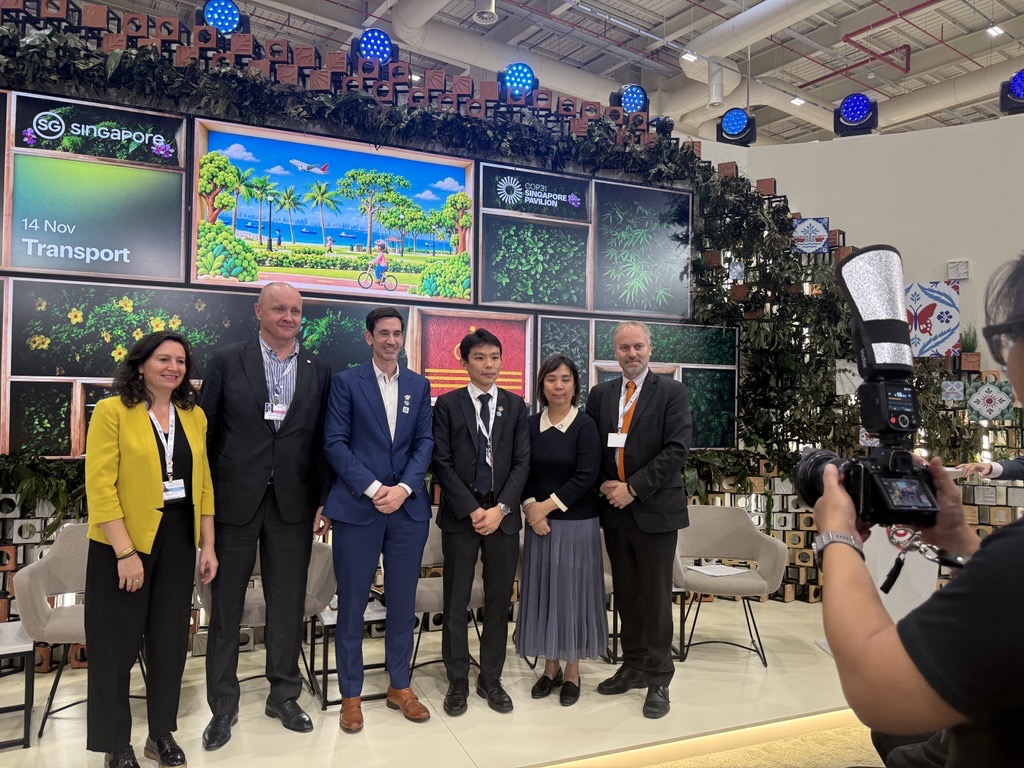
On 14 November, ICAO joined Singapore’s event Building a Long-Term Sustainable Fuel Ecosystem. Discussions focused on securing sustainable feedstock sources, advancing scalable production pathways, as well as the importance of creating enabling policy, investment and market conditions. We highlighted our efforts to support the global scale-up of SAFs through its Assistance, Capacity-building and Training for SAF (ACT-SAF) programme and to enhance access to financing through the ICAO Finvest Hub. The importance of a globally harmonized sustainability criteria and lifecycle assessment methodologies under CORSIA was also emphasized to facilitate investment and deployment across regions.
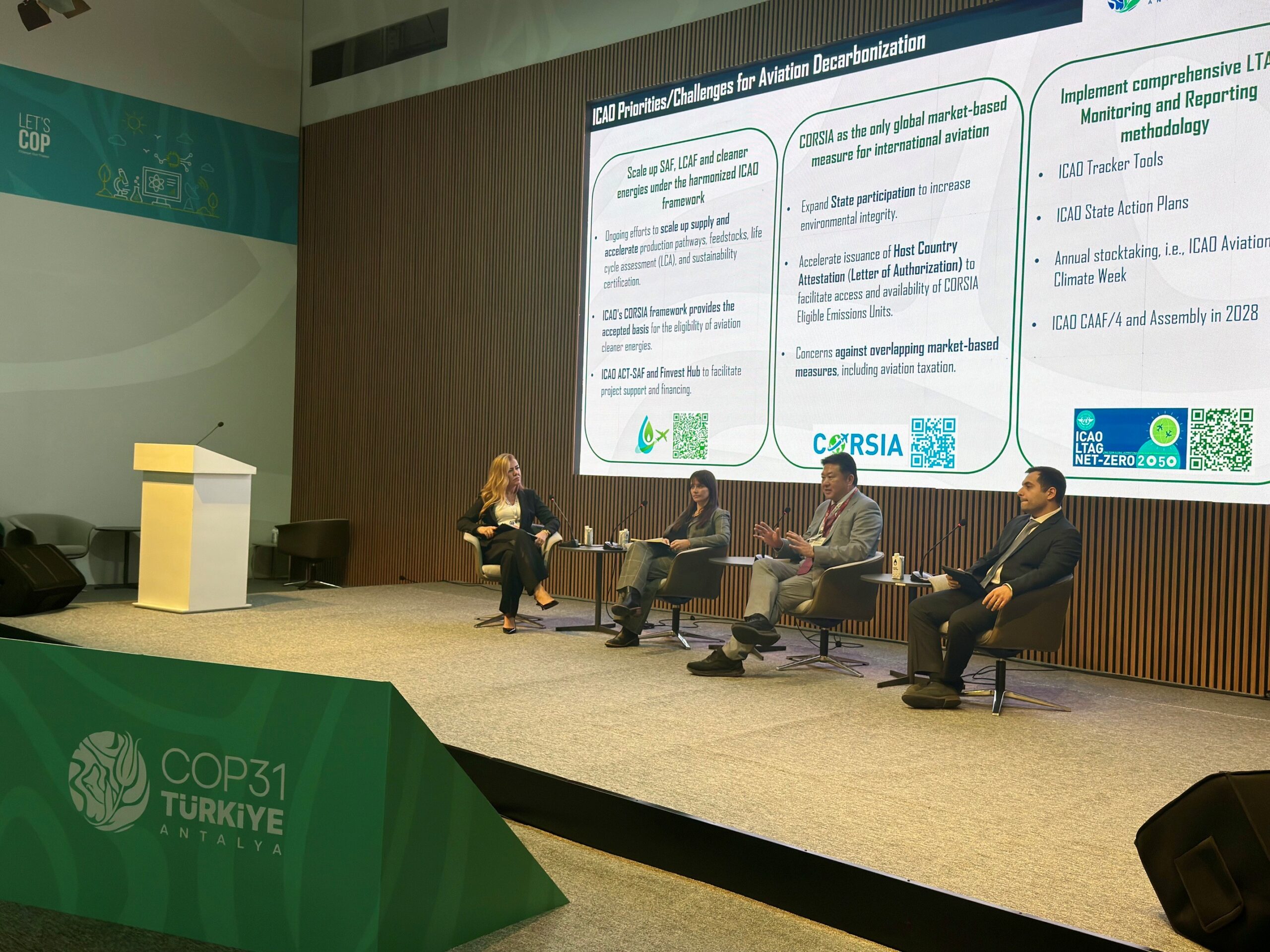
On 18 November, ICAO contributed to the event organized by the National Agency of Civil Aviation (ANAC) of Gabon, From Climate Commitments to Concrete Action: Addressing the Challenges of Aviation Decarbonization in Gabon. The event showcased Gabon’s active efforts to advance aviation decarbonization. We shared about the global aspirational goals adopted by our 193 Member States, ongoing initiatives to achieve these goals, as well as ICAO’s Assistance, Capacity-Building and Training programmes (ACT-CORSIA and ACT-SAF) to support States in implementing CORSIA and in advancing the development and deployment of SAF.
On 19 November, ICAO spoke at the IATA and FICCI side event Creating Synergies: CORSIA, Article 6, and NDCs. The discussion examined how carbon markets, CORSIA and Nationally Determined Contributions (NDCs) can work together to support climate objectives while avoiding double counting. We emphasized the importance for projects seeking CORSIA eligibility to align with CORSIA’s emissions unit criteria, while highlighting the urgent need to accelerate host country authorizations (letters of authorization) to facilitate access to these units by aeroplane operators. This will be critical to support the effective implementation of CORSIA, as its second phase begins in 2027.
COP31 Developments of Relevance to International Aviation
While international aviation is led by ICAO and is distinct from the UNFCCC process, which focuses primarily on domestic emissions, discussions in the negotiation rooms can still shape the broader policy and financing environment with impact on aviation. Climate finance continued to be a prominent topic across COP31, ranging from formal negotiations on the Climate Finance Work Programme to Presidency-led initiatives such as the Baku-to-Belém Roadmap to 1.3T, as well as at side events. Discussions reflected the growing recognition that significantly greater financial flows will be needed to support climate action as well as adaptation.
While proposals on innovative finance, including sector-based contributions and solidarity levies, continued to be advocated by some through the COP processes, it is important to emphasize that aviation should not be targeted as a source for the mobilization of climate finance to other sectors (ICAO Assembly Resolution A42-21, paragraph 19 refers). Access to financing is equally critical for the aviation sector’s decarbonization efforts, as the transition to aviation cleaner energies is estimated to require cumulative investments of around USD 3.2 trillion by 2050. The design of any new financing approaches through the COP processes should recognize the significant investments required for aviation’s decarbonization efforts and support, rather than undermines, the implementation of ICAO’s globally agreed framework.
““While recognizing that no effort should be spared to obtain means to support the reduction and stabilization of CO2 emissions from all sources and emphasizing the need for significant financial resources to achieve aviation’s clean energy transition and the LTAG, urges that ICAO and its Member States express a clear concern, through the UNFCCC and other relevant processes, on the use of international aviation as a potential source for the mobilization of revenue for climate finance to the other sectors, in order to ensure that international aviation would not be targeted as a source of such revenue in a disproportionate manner;”
At COP31, Parties also discussed how to sustainably fund the infrastructure, processes and capacity-building needed to operationalize the Paris Agreement Article 6.2 cooperative approaches. The discussions explored a range of funding options, including core UNFCCC funding, user-fee models and hybrid approaches. For aviation, these discussions are particularly noteworthy, as Article 6.2 mechanisms may increasingly facilitate the generation and transfer of mitigation outcomes that could qualify as CORSIA Eligible Emissions Units, thereby supporting the implementation of CORSIA. Deliberations on the funding arrangements will continue at the 2027 June Climate Meetings (SB66).
Discussions on the mechanism established by Article 6, paragraph 4, of the Paris Agreement also noted concerns expressed by some stakeholders regarding the effective and practical application of methodological standards and tools under the mechanism, and requested the Supervisory Body, in further developing, approving and revising such
standards, methodologies and tools, to encourage broad participation. These developments would have implementations on the Paris Agreement Crediting Mechanism (PACM) and its use under CORSIA.
At the discussions on Response Measures, Parties also examined the social and economic impacts of climate policies. Several Parties highlighted the importance of assessing how measures affecting transport, trade and connectivity may influence economic development, especially for vulnerable economies. Small island developing States and landlocked developing countries pointed to the importance of maintaining affordable and reliable access to global markets and transport networks, including aviation, during the transition to lower-carbon economies. Consideration of response measures is expected to continue as part of preparations for the second Global Stocktake (GST-2).
Conclusion
Throughout COP31, ICAO reinforced our leadership in addressing international aviation emissions through a globally harmonized approach agreed by its 193 Member States. Through our engagements, we highlighted the importance of accelerating the deployment of SAF, Lower Carbon Aviation Fuels and other Aviation Cleaner Energies, advancing the LTAG, and supporting the effective implementation of CORSIA, particularly as the scheme enters its second phase in 2027. By engaging with governments, industry, financial institutions and international organizations, we are continuing to promote cooperation, mobilize support and strengthen partnerships needed to accelerate aviation decarbonization and ensure that international aviation continues to contribute to global climate action.
The conversation on aviation’s environmental future will continue during ICAO Aviation Climate Week 2027, taking place from 31 May to 2 June at ICAO Headquarters in Montréal, followed by the ICAO Global Sustainable Aviation Marketplace (GSAM) from 3 to 4 June. Bringing together States, industry stakeholders, international organizations and financial institutions, the events will explore progress in aviation decarbonization, implementation challenges and opportunities to mobilize investment in support of aviation’s transition towards net-zero carbon emissions by 2050. We invite you to explore the preliminary programme and learn more about the upcoming discussions through the link below.