Every year, the United Nations Framework Convention on Climate Change (UNFCCC) Conference of the Parties (COP) brings together world leaders, UN agencies, negotiators, climate experts, businesses, activists, Indigenous Peoples and relevant stakeholders to deliberate on the current and emerging challenges of climate change. The 30th meeting of the COP (COP30) took place in Belém, Brazil, from 10 to 22 November 2025. ICAO has consistently contributed to past COP meetings; our official statements and submissions can be accessed through the ICAO@COP30 website.
COP30’s Action Agenda is structured around six action areas: Energy, Industry & Transport; Oceans & Biodiversity; Agriculture & Food Systems; Cities, Infrastructure & Water; Human and Social Development; and Cross-cutting issues. In the lead-up to and during COP30, ICAO actively engaged in the work of Activation Group 2 “Accelerating Zero- and Low-Emission Technologies in Hard-To-Abate Sectors” under Axis 1 “Transitioning Energy, Industry, and Transport”.

Represented by the Envoy of the ICAO Secretary-General to the UNFCCC, Ms. Jane Hupe, and Mr. Tetsuya Tanaka, Chief, Climate Change, our COP30 delegation organized and participated in a number of events and actively participated in several discussions to share the latest progress by ICAO and our Member States in addressing international aviation emissions. More information on these activities is available on the ICAO at COP30 website.
ICAO’s Events and Engagements at COP30
On the opening day of COP30, ICAO hosted a standalone side event ‘International Aviation and SDG7: Accelerating the Global Clean Energy Transition Skyward’. The event highlighted ICAO’s progress on accelerating aviation cleaner energies, our contributions to the global clean energy transition and Sustainable Development Goal (SDG) 7 related to clean energy. ICAO Council President, Salvatore Sciacchitano, addressed the event via an opening video message, emphasizing the importance of turning commitment into measurable action and highlighting ICAO’s efforts in this regard.
“During ICAO’s 42nd Assembly, the 193 Member States renewed ICAO’s mandates, to lead the sector in advancing these shared goals. Their message was clear: it is now time to focus on implementation and accelerate action. Three ICAO Assembly Resolutions were adopted under the Environmental Agenda, specifically on Climate Change, CORSIA, and General Provisions on Noise and Local Air Quality. Together, they send a powerful message: international aviation stands united in this commitment to achieve net zero carbon emissions by 2050. Building on the momentum from the 42nd Assembly, ICAO will intensify its efforts to accelerate aviation cleaner energies transition by promoting Sustainable Aviation Fuels (SAF), Lower Carbon Aviation Fuels (LCAF) and other cleaner energy sources.”
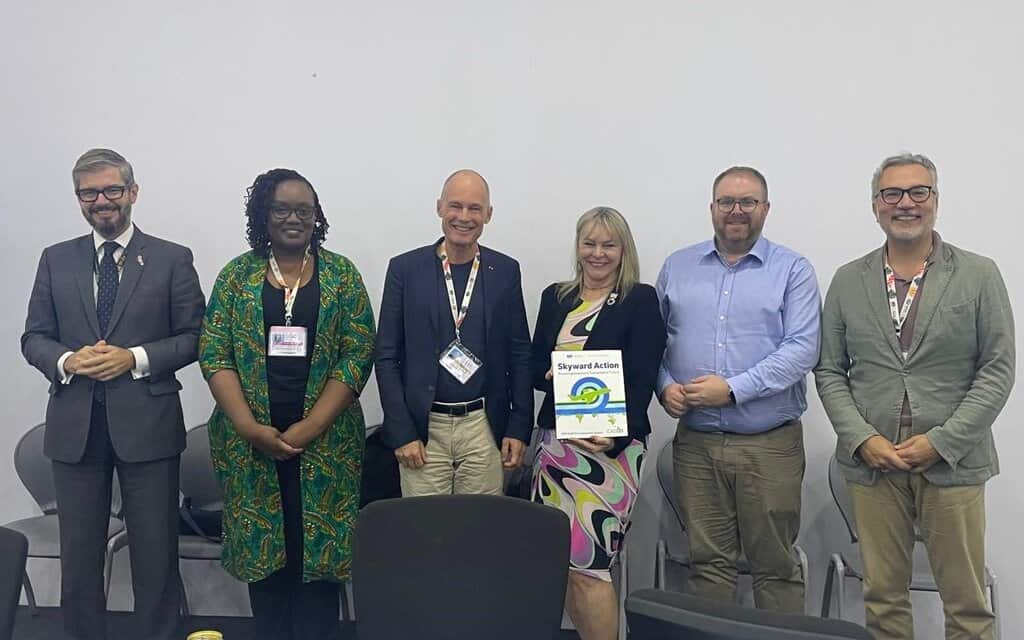
Moderated by Jane, the session featured Mr. João Marcos Paes Leme, Director of the Energy Department of the Brazilian Ministry of Foreign Affairs; Dr. Pacifica F. Achieng, Director of Climate Change of the Kenyan State Department of Environment; Mr. Haldane Dodd, Executive Director of the Air Transport Action Group (ATAG); Mr. Stefano Marguccio, Deputy CEO of Sustainable Energy for All (SEforALL); and Dr. Bertrand Piccard, Chairman of the Solar Impulse Foundation & Climate Impulse. The diverse speakers highlighted aviation cleaner energy from multiple angles, from government to industry and international bodies, how collaboration can unlock synergies in the global clean energy transition.
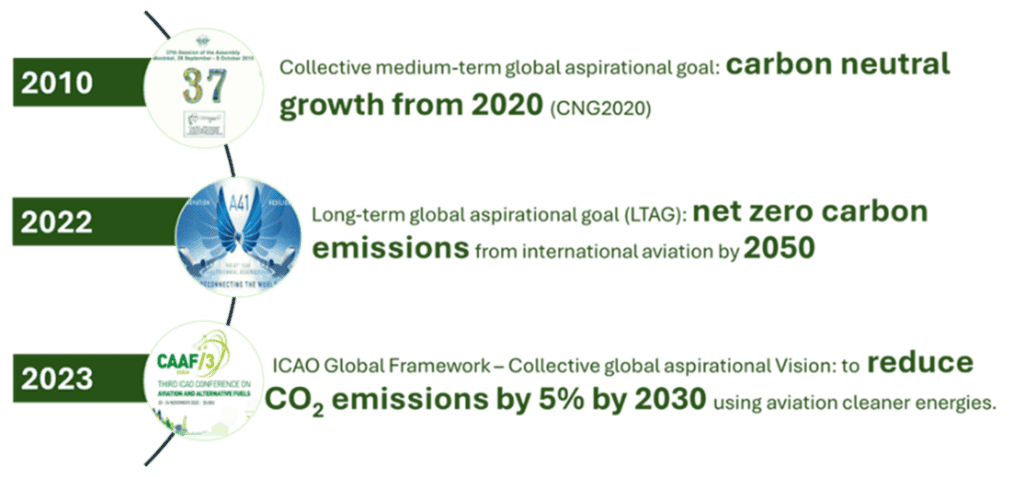
Jane set the scene by providing recent developments on ICAO’s Long-Term Global Aspirational Goal (LTAG) of achieving net-zero carbon emissions from international aviation by 2050, as well as the ICAO Global Aspirational Vision to reduce CO₂ emissions by 5% by 2030 through the use of cleaner aviation energies. She highlighted the outcomes of the 42nd Session of the ICAO Assembly, progress made in accelerating aviation cleaner energies, the robust implementation of ICAO’s Carbon Offsetting and Reduction Scheme for International Aviation (CORSIA), and the challenges related to financing and aviation taxation.
On 11 November, ICAO provided a Statement at the joint plenary of COP30 and the Sixty-third session of the UNFCCC Subsidiary Body for Scientific and Technological Advice (SBSTA 63). ICAO’s statement highlighted the three ICAO global collective goals for international aviation, the progress made under these goals, and the outcomes of the 42nd ICAO Assembly.
Progress in the implementation of CORSIA was emphasized, particularly its robust Monitoring, Reporting and Verification (MRV) system, and the need for governments to facilitate and expedite access to CORSIA-Eligible Emissions Units by aeroplane operators through the issuance of Letters of Authorization. Jane underscored the momentum behind aviation cleaner energies, citing the near doubling of airports supplying SAF over the last triennium, ICAO’s harmonized regulatory framework, and our successful capacity-building programme: “ICAO’s leadership in addressing all matters related to international aviation has been renewed in the last Assembly, and we stand united, ambitious, and fully committed to achieving net-zero carbon emissions by 2050 to complement the Paris Agreement temperature goals.”
Participants also noted that the ICAO Assembly has adopted the LTAG monitoring and reporting (LMR) methodology to track progress towards net-zero, and Member States’ concerns with the growing number of initiatives to impose taxes on international aviation to generate revenue for other sectors.
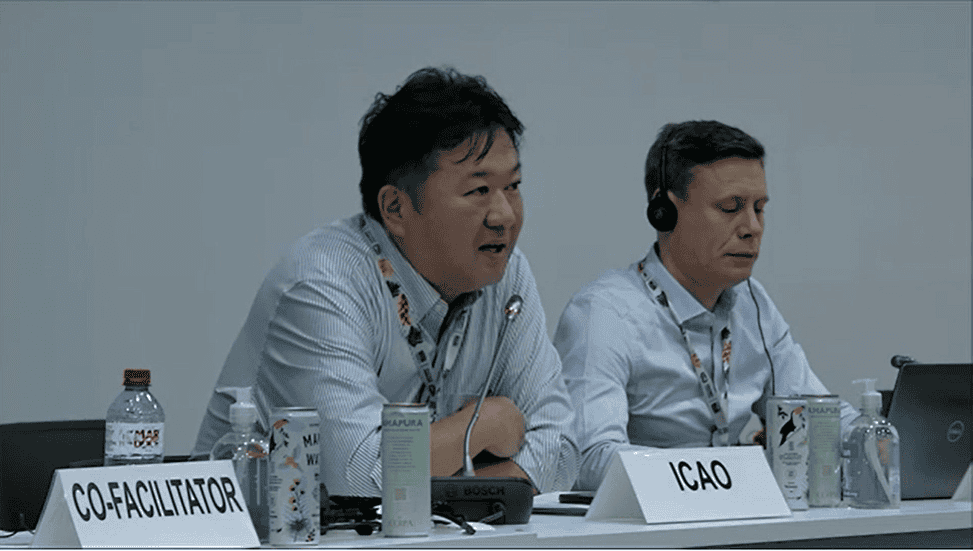
“CORSIA implementation, since its adoption ten years ago, is on-track with the robust CO2 emissions monitoring, reporting and verification (MRV) every year. Access to CORSIA Eligible Emissions Units is key. The ICAO Council has approved addition programmes to supply CEEU. We encourage host country governments to issue Letter of Authorization to facilitate the access and availability of CEEU to airlines under CORSIA”
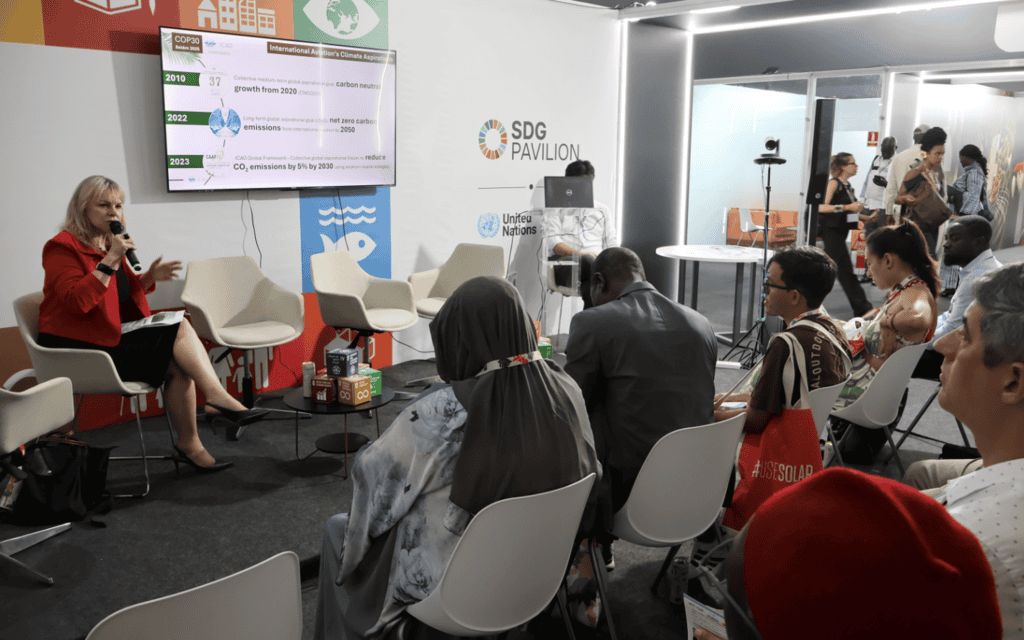
During the second week, ICAO organized a second side event ‘Assistance, Capacity-Building and Training (ACT) to Drive Aviation’s Clean Energy Transition and the Achievements of the SDGs’ on 17 November in the SDG Pavilion.
Jane shared ICAO’s achievements and leadership in addressing international aviation emissions, with a particular focus on the sector’s clean energy transition, highlighting the four building blocks: policy and planning, regulatory frameworks, implementation support, and financing. Participants were also informed about ICAO’s Assistance, Capacity-Building, and Training for Sustainable Aviation Fuels (ACT-SAF) programme and the various ways States can participate as part of aviation’s contributions to SDGs.
“ACT-SAF is crucial because the sufficient amount of sustainable aviation fuels by 2030 requires immediate action. By supporting all States, including those not yet ready, to produce SAF, we not only advance clean energy for aviation but also create jobs, transfer technologies, and contribute to multiple SDGs.” The recording is shared below.
ICAO’s Contributions to other COP30 Side Events
On 11 November, ICAO participated in a side-event organized by the Global Biofuels Alliance (GBA) on ‘The Critical Role of Biofuels in Achieving a Net Zero Vision’. Speakers discussed policies to promote sustainable and inclusive biofuel production, focusing on advancing climate action and translating the Belém 4X Sustainable Fuels Pledge into concrete action. Jane emphasized that scaling up the use of aviation cleaner energies require globally harmonized standards on sustainability and lifecycle assessments, as exemplified by the ICAO Assembly’s confirmation of ICAO’s sustainability criteria, certification, and life cycle emissions assessment under CORSIA as the accepted basis for the eligibility of aviation cleaner energies.
On 13 November, ICAO participated in the COP30 Presidency event ‘Plan to Accelerate Solutions (PAS) Implementation Workshop: Carbon Accounting’, organized by Brazil’s Ministry of Foreign Affairs with ISO, the Greenhouse Gas Protocol (GHGP), and UNIDO. The session focused on the draft Acceleration Plan to Harmonize Global Carbon Accounting Standards. In Jane’s intervention she noted, “across all 193 ICAO Member States, we need clear standards to guide air transport operations. To unlock finance for SAF, we need goals, certification, certainty, and harmonization. While one universal standard may not be realistic across all sectors, an overarching approach that ensures comparability and interoperability is essential. Investors need certainty, and standards provide exactly that.”
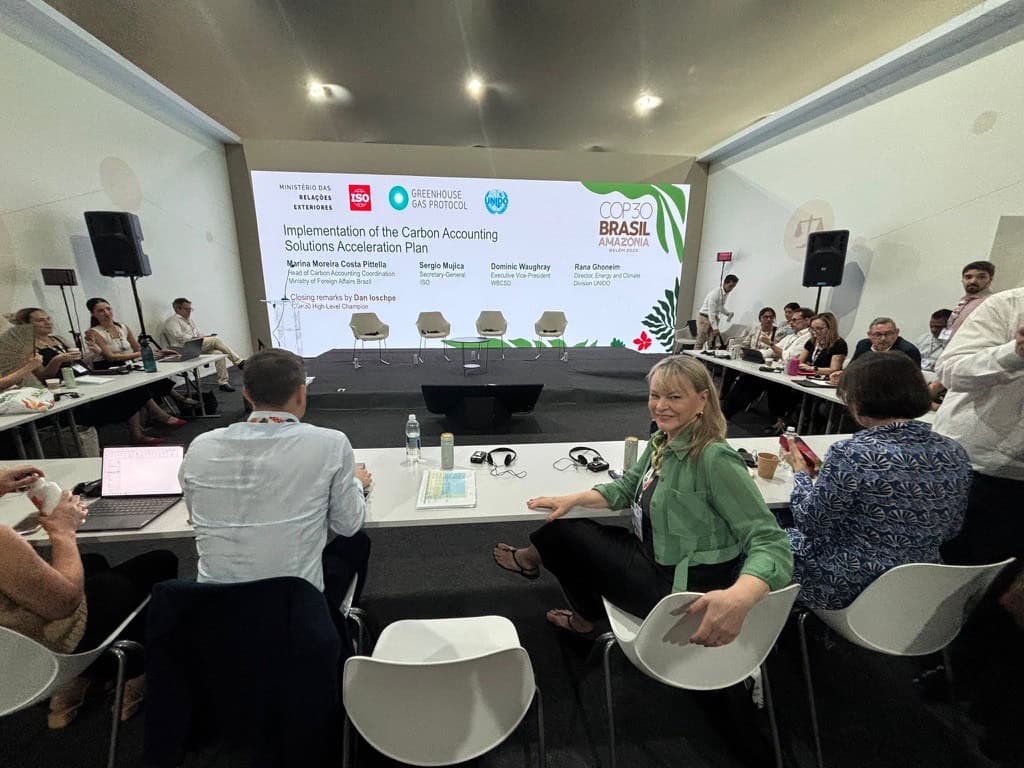
Speakers for this event included Ms. Marina Moreira Costa Pittella, Head of Carbon Accounting Coordination, Ministry of Foreign Affairs of Brazil; Mr. Sergio Mujica, Secretary-General, ISO; Mr. Dominic Waughray, Executive Vice-President, WBCSD; and Ms. Rana Ghoneim, Director at the Energy and Climate Division, UNIDO.
On the same day, Jane also spoke at the event titled ‘Clearing the Skies: Financing and Scaling Sustainable Aviation Fuels in Asia’, at the Singapore Pavilion. This event discussed the Asia-Pacific SAF Outlook 2025, and discussed how policy alignment, innovation, and financing can drive the region’s SAF development. She explained the challenges in scaling SAF, particular the role of policy and challenges with pricing, taxes, and levies.
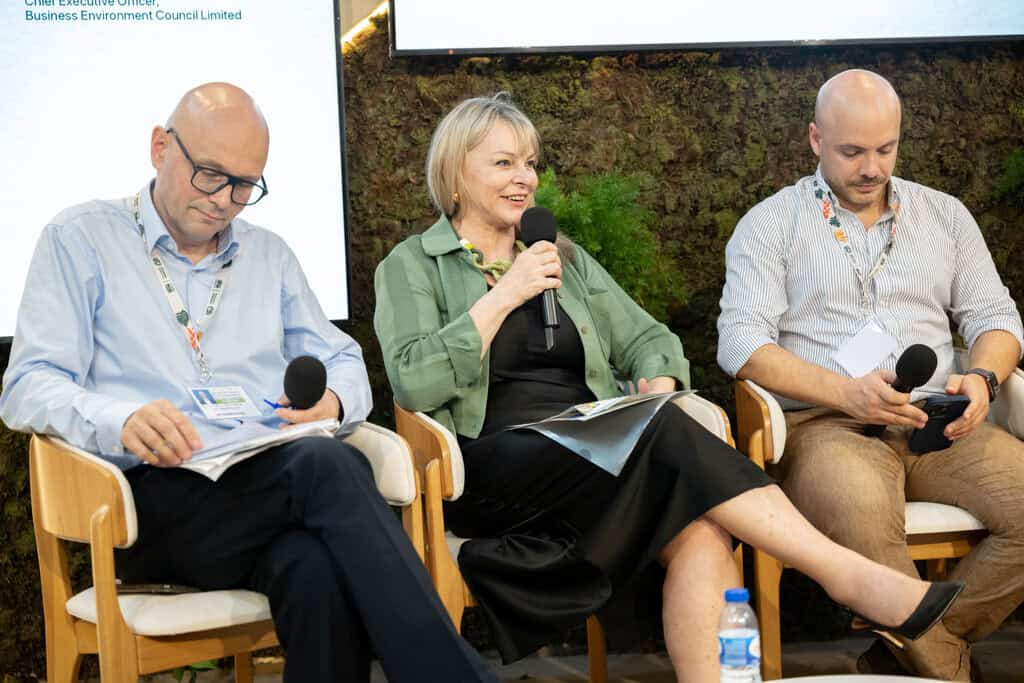
“If we do not get the policy and pricing framework right, we will never be able to reach the goals we have set, and this will have serious implications for CORSIA and the broader development of sustainable aviation fuels. Overlapping and duplicative taxes and levies risk discouraging investment where it is most needed in aviation decarbonization.”
Alongside Jane, the panel was composed of Mr. Simon Ng, CEO of Business Environment Council, BEC, Hong Kong; Mr. Pedro de la Fuente, Senior Manager, IATA; and Dr. Jari Kauppila, Head of Secretary-General’s Office, ITF.
On 14 and 15 November, the COP30 Energy and Transport Thematic Day, ICAO contributed to multiple high-level discussions.
ICAO was part of the COP30 Presidency’s Ministerial Roundtable: ‘Implementing the COP30 Belém 4X Pledge on Sustainable Fuels’, organized by the Clean Energy Ministerial (CEM). This roundtable highlighted the CEM Future Fuels Action Plan as the main platform for implementing the Belém Pledge to quadruple global sustainable fuel use by 2035, showcasing concrete cross-sector actions on demand creation, lifecycle carbon accounting, and market development.
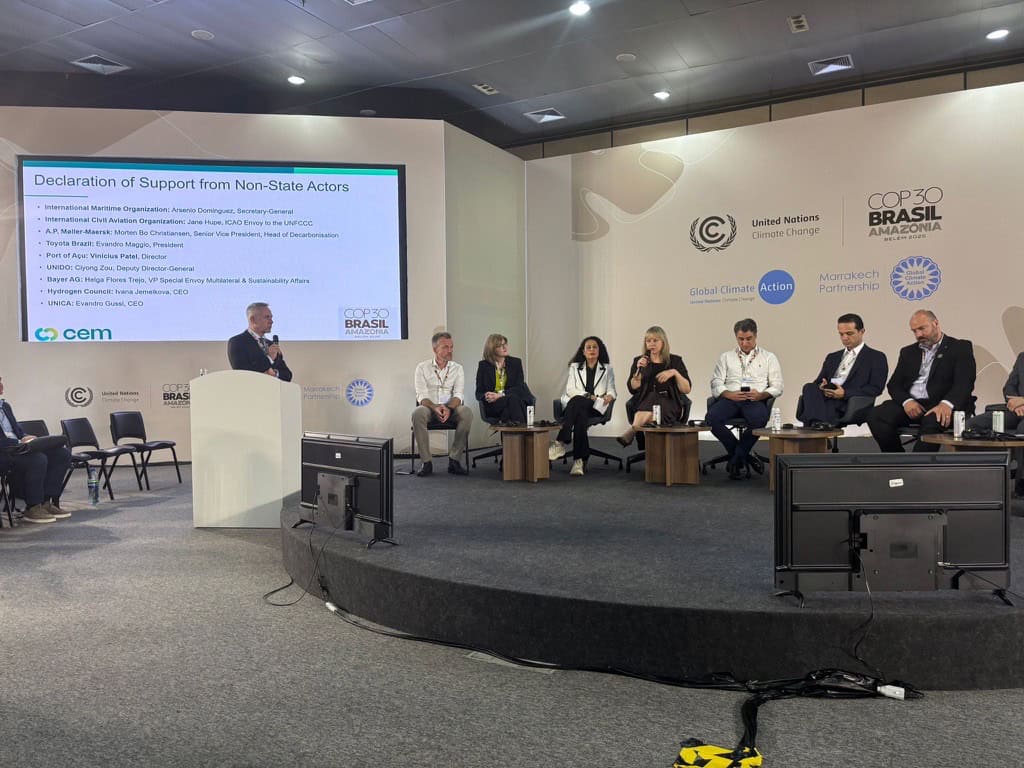
Jane shared ICAO’s Vision to reduce international aviation emissions by 5% by 2030 using aviation cleaner energies and the concrete actions taken to achieve the Vision. ICAO was joined by other non-State Actors, including representatives from the IMO, A.P. Meller-Maersk, Toyota Brazil, Port of Açu, UNIDO, Bayer AG, the Hydrogen Council, and UNICA. State Actors included representatives from Brazil, the Netherlands, United Arab Emirates, Italy, Japan, and Indonesia.
Jane also participated in the Climate High-Level Champions event for aviation: ‘Demonstrating Scalable Results in Aviation Decarbonisation’, organized by ATAG, Panamerican Liquid Biofuel Coalition (CPBIO), and the Sustainable Aviation Buyers Alliance (SABA). This event showcased progress within international aviation toward net-zero and scalable solutions in SAF, technology, and policy. It brought together governments, industry, and civil society to demonstrate implementation at scale and accelerate the sector’s climate action.

Prior to this event, ICAO also actively contributed to the COP30 Presidency’s Action Agenda, cumulating in the publication of the Plan to Accelerate Solution (PAS) on Decarbonization of Aviation, in collaboration with various aviation stakeholders. This document features ICAO’s ongoing policies and initiatives to address international aviation emissions under its mandate, as also endorsed by the 42nd ICAO Assembly.
Other speakers for this event include Ms. Maria Whittaker, Chief Corporate Responsibility Officer at ABRA Group; Ms. Giulia Tonon, Sr. Manager – Industrial Transition Acceleration at Systemiq; and Ms. Emily Hickson, Director of Climate Catalyst.
Tetsuya represented ICAO at the side event organized by the World Green Economy Organization (WGEO) titled ‘Scaling Sustainable Aviation Fuels and Aligning with CORSIA’. Participants were informed on ICAO’s progress in scaling aviation cleaner energy including by supporting policy development, establishing a harmonized regulatory framework under CORSIA, enhancing capacity-building building as well as facilitating access to financing for aviation decarbonization projects.

“ICAO is moving quickly: 11 SAF feasibility studies have been delivered and over 50 studies are expected by 2028. But accelerating SAF development requires resources. The ICAO Finvest Hub is a key facilitator, helping to match projects with the financing they need to move from ambition to deployment.”
Other speakers include Mr. Matthias Berninger, head of Public Affairs, Sustainability, and Science, Bayer; Mr. Pedro de la Fuente, Senior Manager, IATA; and Mr. Mark Essle, Partner at Kearney, as the moderator. The recording of the session can be found here.
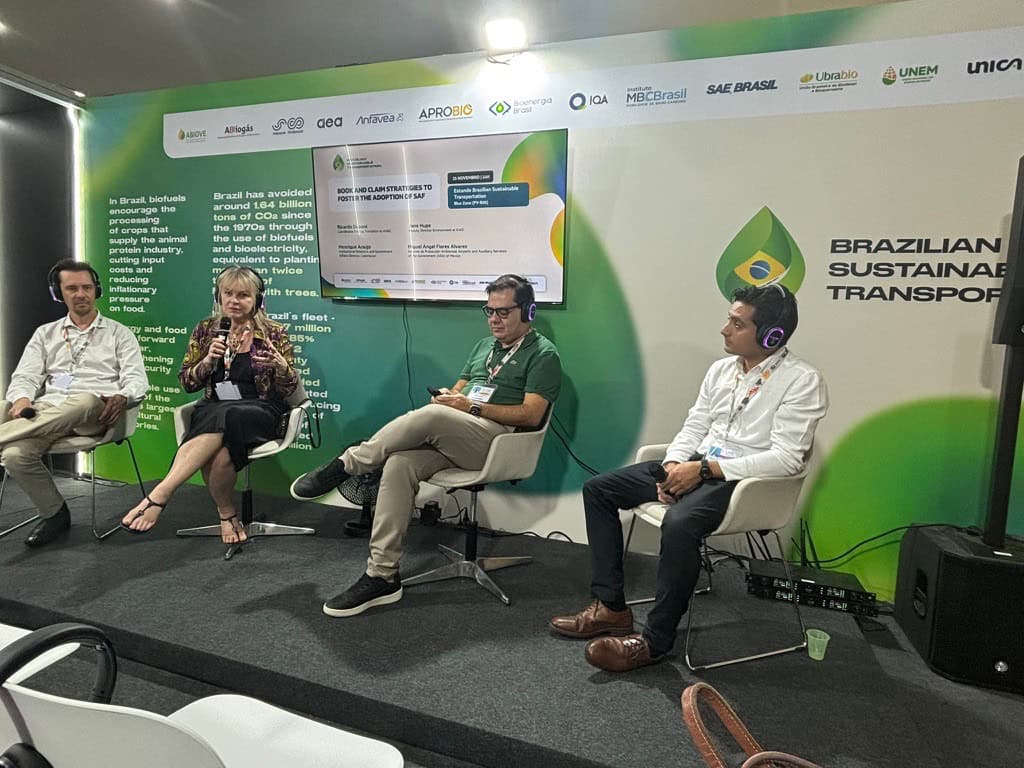
On 15 November, Jane joined the event ‘Book and Claim strategies to foster the adoption of SAF ‘, organized by the Brazilian Sugarcane and Bioenergy Industry Association (UNICA). This panel explored how Book & Claim systems can be integrated into global SAF strategies, supporting broader adoption, financing, and the achievement of aviation decarbonization targets under CORSIA. Jane was accompanied in the panel by Mr. Miguel Angel Flores Alvarez, Environmental Protection Officer, ASA Mexico; and Mr. Ricardo Dupon, Energy Transition Coordinator, ANAC.
On 18 November, ICAO participated in Deloitte’s side event ‘Navigating Complexities and Enabling Scale: Practical Supplier Pathways for Reducing Emissions in Hard-To-Abate Sector’, which explored how hard-to-abate sectors, including aviation, can reduce emissions while remaining competitive. It examined demand uncertainty, cost and infrastructure challenges, and emerging solutions, highlighting how cross-sector lessons can accelerate decarbonization.
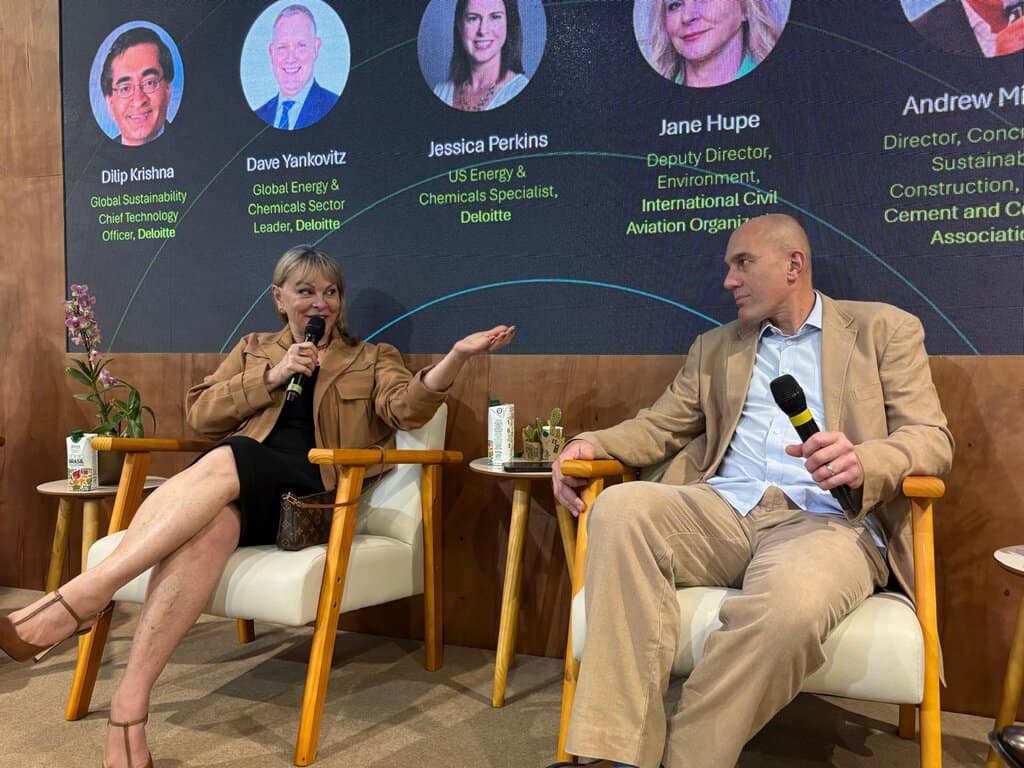
In addition to Jane, this panel included Mr. Dilip Krishna, Global Sustainability Chief Technology Officer, Deloitte; Mr. Dave Yankovitz, Global Energy & Chemicals Sector Leader, Deloitte; Ms. Jessica Perkins, US Energy & Chemicals Specialist, Deloitte; and Mr. Andrew Minson, Director, Concrete and Sustainable Construction, Global Cement and Concrete Association.
COP30 also provided an important opportunity for ICAO to engage other leaders to enhance collaboration in advancing environmental protection. In a bilateral meeting with the ITF Secretary-General, Mr. Young Tae Kim, they shared the views on opportunities to enhance cooperation between ITF, ICAO, and IMO in support of the upcoming UN Decade of Transport 2026-2035.
Conclusion
Throughout COP30, ICAO actively showcased its leadership in addressing international aviation emissions. ICAO also actively fostered global partnerships to tap on collective synergies to advance aviation sustainability. ICAO’s engagements in various side events, plenaries, and bilateral meetings highlighted tangible progress, practical solutions, and the collaborative efforts which is driving aviation’s sustainability journey forward.