If we are going to achieve aviation’s carbon-neutral growth goal, we need the Carbon Offsetting and Reduction Scheme for International Aviation (CORSIA). Throughout Climate Week, we focused on how we can strengthen CORSIA’s contributions to this priority, but on the final day of the event, ICAO Member States shared examples of successful implementation to show how States can overcome early barriers.
These examples included a nationwide digital platform for the monitoring, reporting, and verification (MRV) of CO2 emissions, as well as an example of a collaborative model. Panelists discussed how different States are now starting to align each other’s methods and results for verifying and accrediting aviation emissions data. This means that if a system or verification process is approved in one country, it can be recognized by others, harmonizing compliance for airlines that operate internationally.
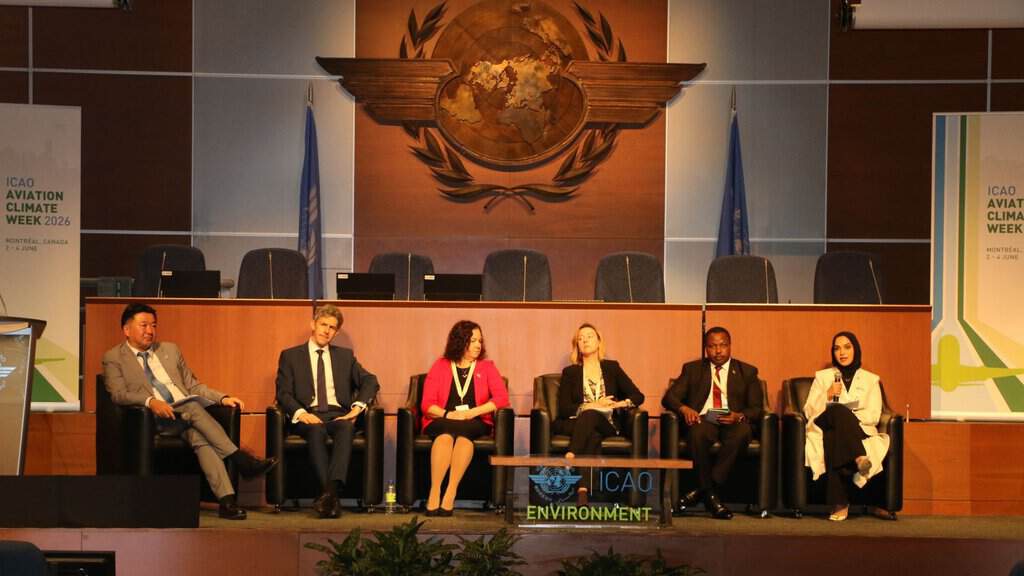
Speakers recognized the many opportunities that are emerging as airline demand and investment continue to increase. Billions in new financing are now paired with regulatory momentum, which is supporting efforts to expand the market for sustainable aviation fuel (SAF) and emissions units, and driving innovation across the supply chain. But they also described a widening gap between the urgent need for CORSIA-certified SAF, lower-carbon aviation fuels (LCAF), and CORSIA-eligible emissions units, and the still-limited current global supply and regulatory approvals.
The conversations don't end when the event concludes. Whether you were unable to attend or would like to revisit a particular discussion, recordings of the ICAO Aviation Climate Week sessions are available on ICAO TV. Access the links below!
Meeting demand for sustainable fuels and carbon offsets
Speakers focused on strategies to address the supply challenges. They encouraged action to resolve bottlenecks and called for collaborative efforts to boost supply of both sustainable fuels and certified offsetting units. Practical tools and outcome-based technical support, including sample reports and step-by-step guidance, were cited as priorities for capacity building in the next phase.
Discussions highlighted that sustained growth will require expanded regional training opportunities and the development of expert networks capable of maintaining verification and accreditation quality. Participants emphasized the need to simplify documentation and ensure information is clear and accessible for newcomers and decision-makers.
Panelists also called for stronger networks and increased sharing of knowledge, encouraging the use of successful case studies and best practices. Ongoing collaboration between ICAO, the UNFCCC, and national authorities will also remain vital for keeping momentum strong as frameworks evolve.
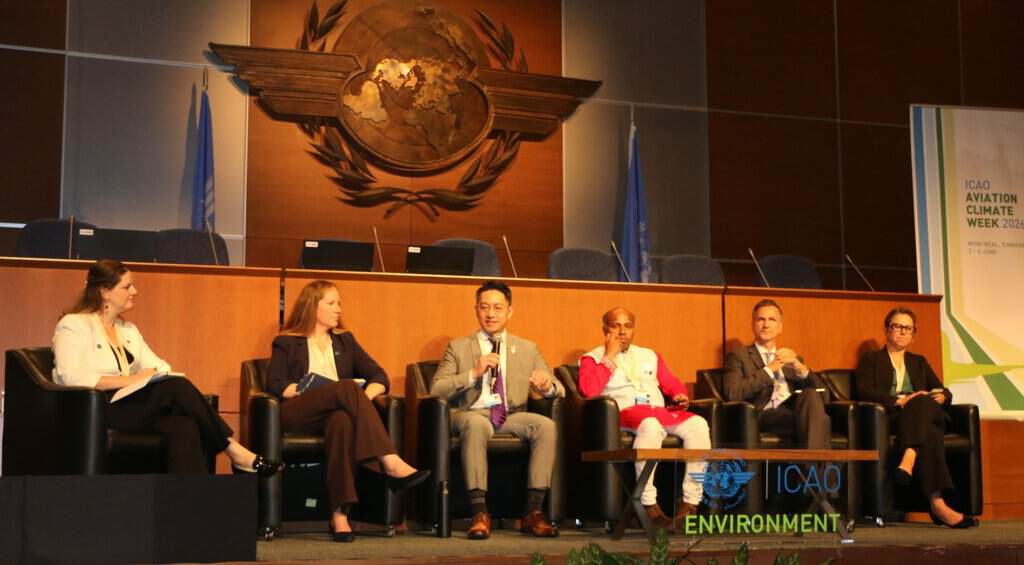
Later in the day, panelists highlighted how the implementation of national or regional aviation taxes in addition to CORSIA results in unnecessary complexity, policy fragmentation, and extra costs for airlines and regulators. They referred to ICAO’s policy leadership and guidance on minimizing international air transport taxes, and cautioned that imposing further taxes could undermine internationally harmonized climate policy and duplicate established standards.
Underscoring how CORSIA provides a single, internationally agreed approach for carbon offsetting in aviation, speakers noted that fragmented taxes absorb resources and attention that could otherwise support global decarbonization. They found that aviation tax revenues rarely fund emission reduction in the sector and are almost always directed into general budgets. Panelists gave examples of States where aviation green taxes were later withdrawn or reduced after proving ineffective in reducing emissions or supporting sustainable aviation.
Speakers underlined the critical importance of air connectivity, particularly for developing counties and Small Island Developing States, and warned that additional taxes risk undermining economic and social resilience in vulnerable regions by increasing travel and operating costs.
The discussion concluded with a call for greater advocacy on these issues, by raising greater awareness of CORSIA’s design, transparency, and ongoing improvements.
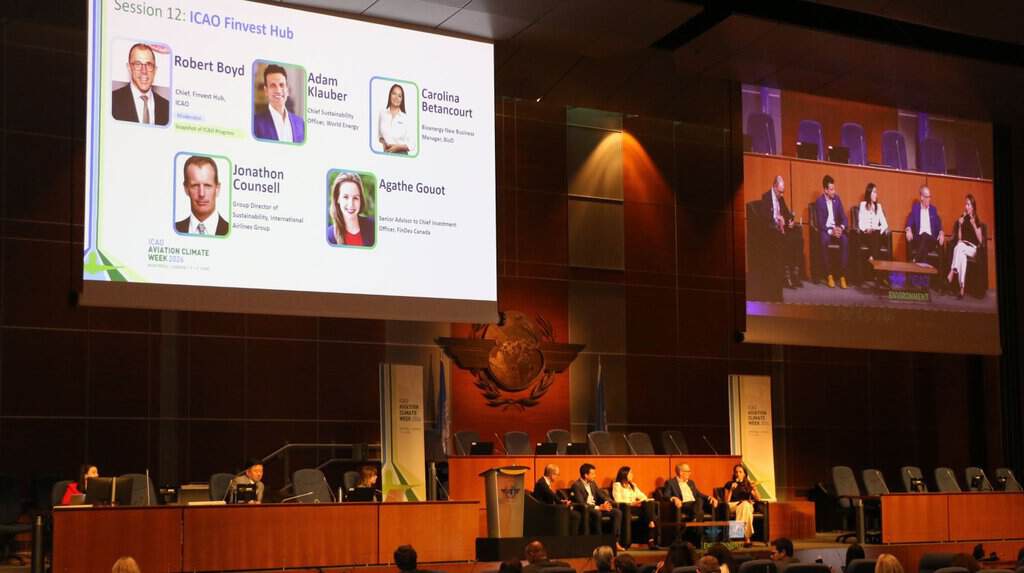
Recognizing that meeting decarbonization goals will require unprecedented investment, participants explored how ICAO’s Finvest platform is supporting the flow of capital to sustainable aviation fuel and emissions reduction projects.
Speakers outlined practical strategies and tools enabled by Finvest, such as providing a repository of investment-ready projects, convening diverse stakeholders, and facilitating partnerships across the finance and aviation sectors. The platform plays a catalytic role by promoting models for long-term offtake contracts, supporting collaboration among public and private investors, and advancing capacity building for project developers. By highlighting the value of recognized certification schemes and pre-investment technical support, Finvest helps build investor confidence and accelerates project readiness.
They also reviewed how Finvest can help overcome the persistent barriers to scaling up project investment. These include the lack of long-term purchase agreements (crucial for project bankability), policy and regulatory uncertainty, and early-stage funding gaps. These issues are especially acute in emerging and developing markets. The session also underlined that perceptions of risk in these markets are often greater than the reality, which can unnecessarily limit the flow of private capital.
The session concluded that Finvest’s value lies in its convening power and ecosystem approach, which lowers barriers to finance, shares best practice, and ensures that promising projects have a clear pathway to investment. As demand for CORSIA-eligible fuels and emissions units grows, Finvest is positioned to help aviation scale up solutions and meet climate commitments through stronger connections, clearer standards, and more effective use of global capital.
We are sharing the recordings of the Aviation Climate Week 2026 discussions on ICAO TV. These sessions provide valuable insights into the policies, technologies, partnerships, and financing mechanisms helping to advance global aviation’s environmental objectives. To find the sessions that most interest you, open the event programme shared below.